
What's Happening?
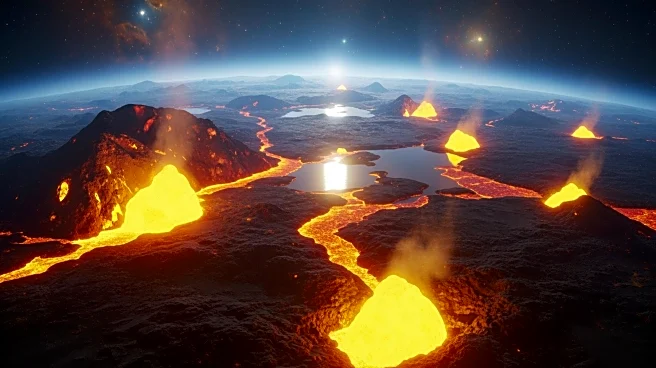
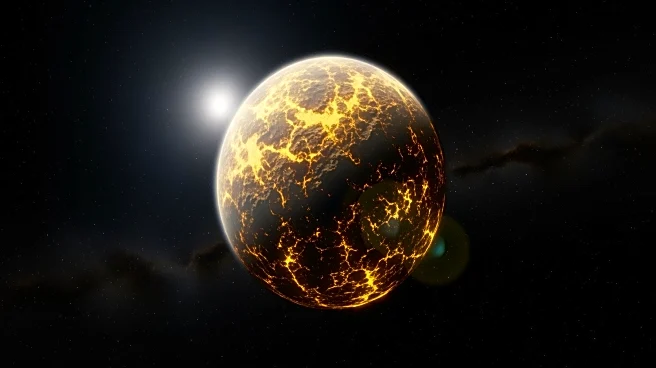
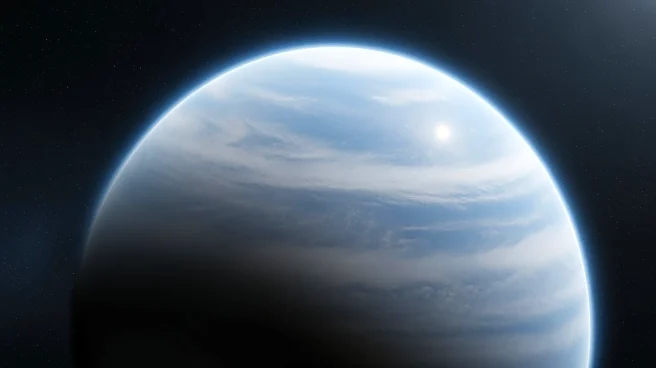
Astronomers have identified a new type of exoplanet, L 98-59 d, located 35 light-years from Earth. This planet, measuring about 1.6 times the size of Earth, does not fit into traditional categories of planetary classification. It features a persistent
magma ocean and stores vast amounts of sulfur within its molten interior, leading to a sulfur-rich atmosphere that likely smells like rotten eggs. Observations from the James Webb Space Telescope revealed the presence of sulfur gases, including hydrogen sulfide. The study, published in Nature Astronomy, used computer simulations to trace the planet's evolution over nearly five billion years, revealing a global magma ocean beneath its surface.
Why It's Important?
The discovery of L 98-59 d challenges existing theories of planet formation and expands our understanding of planetary diversity. The findings suggest that there are many more types of planets in the universe than previously thought, potentially opening new avenues for exploring conditions that might allow life to thrive elsewhere. The planet's unique ability to retain sulfur gases challenges previous assumptions about atmospheric loss in exoplanets, highlighting the need for revised models in planetary science.
What's Next?
Further research is needed to understand the processes that allow L 98-59 d to maintain its sulfur-rich atmosphere. Scientists may conduct additional observations to explore the planet's chemical interactions and atmospheric dynamics. This could lead to new insights into the formation and evolution of similar exoplanets, potentially influencing future studies in planetary science.
Beyond the Headlines
The discovery of L 98-59 d underscores the complexity and diversity of planetary systems beyond our solar system. It raises questions about the processes that shape such unique worlds and the potential for discovering other planets with unusual characteristics. This could have implications for the search for extraterrestrial life and the development of new technologies for space exploration.