



What's Happening?
Diwali celebrations across South Asia, particularly in northern India, are coinciding with the annual return of hazardous winter air pollution. This convergence is prompting concerns about how individuals can safely participate in the festivities. Public
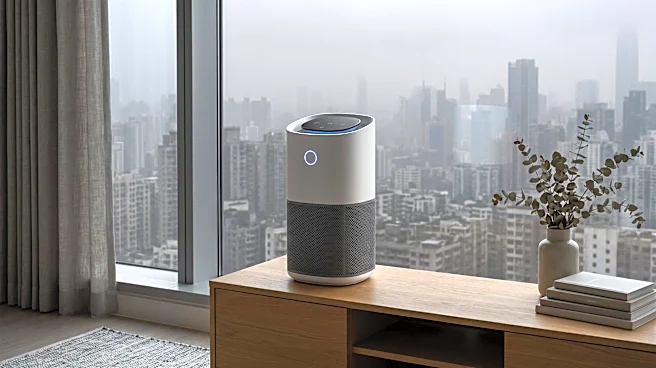
health experts, such as Shweta Narayan of the Global Climate and Health Alliance, highlight that while poor air quality is a year-round issue in the region, firecrackers traditionally used during Diwali significantly exacerbate the problem. The air quality index (AQI) in India categorizes pollution levels, with readings of 201-300 as 'poor,' 301-400 as 'very poor,' and 401-500 as 'severe,' the latter posing risks even to healthy individuals. Beyond firecrackers, the broader issue of air pollution in India, Pakistan, and other parts of South Asia stems from traffic, industrial emissions, construction dust, and the burning of crop residues and waste. Weak winds and stagnant winter air further trap these pollutants near the ground, leading to severe smog. Experts advise checking local air quality levels, wearing appropriate masks, and using air purifiers to mitigate exposure.
Why It's Important?
The annual recurrence of severe air pollution during Diwali carries significant public health implications for millions across South Asia. The combination of existing pollution sources and the additional emissions from firecrackers creates a toxic environment that can lead to immediate and long-term health problems. Dr. Arvind Kumar, a chest surgeon and founder trustee of the Lung Care Foundation, warns that pollution can cause persistent coughing, airway inflammation, asthma attacks, and increase the risk of pneumonia, heart attacks, and strokes. Prolonged exposure is also linked to impaired lung development in children and lung cancer. The economic impact is also substantial, as reduced productivity due to illness and increased healthcare costs strain individuals and public health systems. Furthermore, the issue highlights a broader environmental challenge that requires sustained governmental action, as personal precautions alone are insufficient for many, especially those who work outdoors or cannot afford protective measures like air purifiers.
What's Next?
As Diwali celebrations continue, public health advisories will likely emphasize personal protective measures such as wearing N95 or N99 masks outdoors, avoiding strenuous physical activity during peak pollution hours, and using HEPA air purifiers indoors. Authorities in heavily affected areas, like Delhi, may implement temporary restrictions on construction, industrial activities, and vehicle usage, though experts note these often fail to address root causes. There will be continued calls for governments to implement long-term strategies to combat pollution, including promoting electric vehicles and regulating industrial emissions. Public health advocates will likely continue to press for sustained action on pollution sources and improved access to affordable healthcare for those suffering from pollution-related illnesses. The ongoing challenge will be balancing cultural traditions with public health imperatives, potentially leading to increased advocacy for alternative, less polluting ways to celebrate festivals.
Beyond the Headlines
The recurring air pollution crisis during Diwali underscores a complex interplay of cultural traditions, rapid industrialization, and environmental governance challenges in South Asia. The tradition of using firecrackers, deeply embedded in Diwali celebrations, clashes with growing scientific evidence of their detrimental health impacts, creating a societal dilemma. This situation highlights the tension between cultural preservation and public health, prompting a re-evaluation of how traditions can evolve to be more sustainable. Ethically, it raises questions about collective responsibility for air quality and the equitable distribution of its burdens, as vulnerable populations often bear the brunt of pollution. Legally, it points to the need for more stringent environmental regulations and their effective enforcement. Culturally, there's a growing movement to promote alternative, eco-friendlier ways to celebrate Diwali, such as electric lighting and community gatherings, signaling a potential long-term shift in festive practices driven by environmental consciousness and health concerns.