







What's Happening?
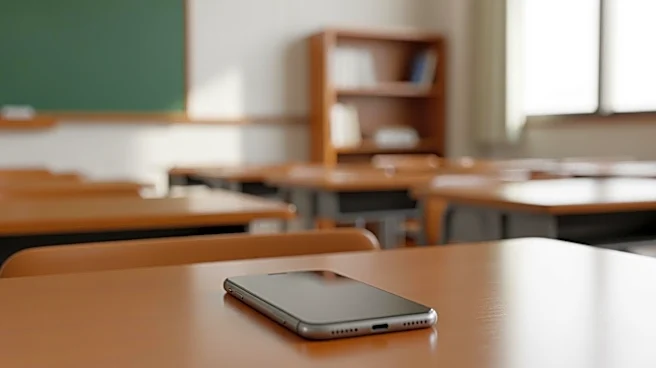
Richard Mercado, a baseball coach at Mater Dei High School, has observed a significant change in student behavior during lunch periods following the implementation of a cellphone ban. According to Mercado, students are now engaging in conversations with
one another instead of being absorbed in their phones. This shift has been noted as a positive development, as students are interacting more with their peers, including those outside their usual social circles. The trend of banning cellphones during school hours is gaining traction in various schools and districts, aiming to foster better communication and social skills among students.
Why It's Important?
The move to ban cellphones in schools is seen as a way to enhance social interaction and communication skills among students, which are crucial for personal and professional development. By reducing screen time, students may develop stronger interpersonal relationships and improve their ability to engage in face-to-face conversations. This initiative could also lead to a more inclusive school environment, as students are encouraged to interact with a broader range of peers. The policy may have long-term benefits, potentially improving students' social skills and emotional intelligence, which are valuable in both academic and future workplace settings.
What's Next?
As more schools adopt cellphone bans, it will be important to monitor the impact on student behavior and academic performance. Schools may conduct surveys or studies to assess the effectiveness of these policies in improving social interaction and reducing distractions. Additionally, educators and administrators might explore complementary strategies to further enhance student engagement and communication skills. The success of these initiatives could influence other schools to implement similar policies, potentially leading to a broader cultural shift in how technology is integrated into educational environments.