









What's Happening?
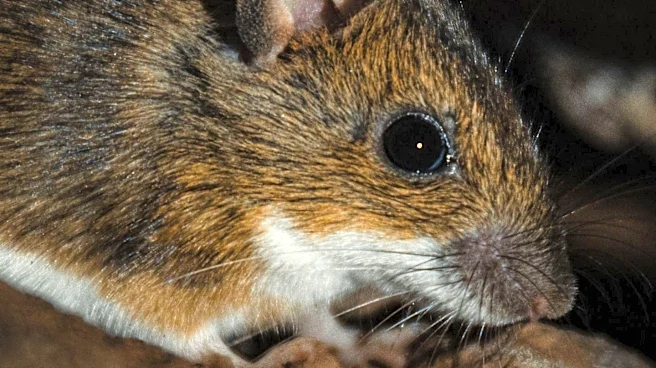
A recent study has uncovered how the Andean leaf-eared mouse, Phyllotis vaccarum, survives at altitudes exceeding 6,700 meters in the Andes, an environment previously thought uninhabitable for mammals. Discovered in 1912, these mice have adapted to the harsh
conditions of the Andes' volcanic summits, where oxygen levels are significantly lower and temperatures remain below freezing. Researchers conducted extensive studies, including whole-genome sequencing and physiological experiments, to understand these adaptations. The mice have developed a high number of mitochondria in their muscles, allowing them to generate heat efficiently with minimal oxygen. They also possess genetic adaptations for detoxifying plant toxins, enabling them to consume the sparse, often toxic vegetation available at such altitudes.
Why It's Important?
The findings provide insight into the complex evolutionary processes that allow species to thrive in extreme environments. This research not only enhances our understanding of high-altitude adaptation but also has potential implications for biomedical research. The ability of these mice to survive with limited oxygen could inform studies on human diseases characterized by oxygen deprivation, such as cancer. Additionally, the study highlights the importance of metabolic and detoxification adaptations, expanding the focus beyond traditional respiratory adaptations in high-altitude research.
What's Next?
Future research will aim to further explore the diet of the Andean leaf-eared mouse and the specific role of detoxification genes in their survival. Understanding these mechanisms could provide broader insights into how animals adapt to extreme environments and inform conservation strategies for other species facing similar challenges.