

What's Happening?
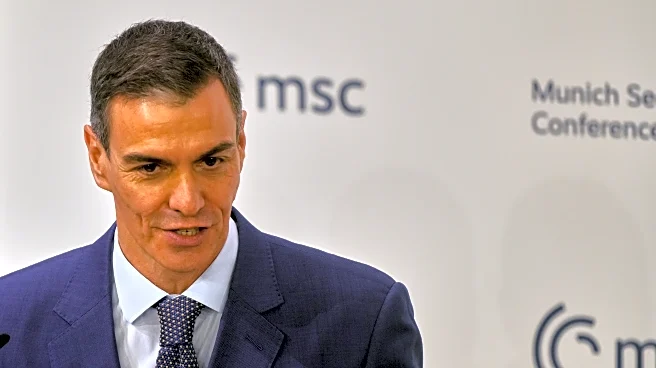
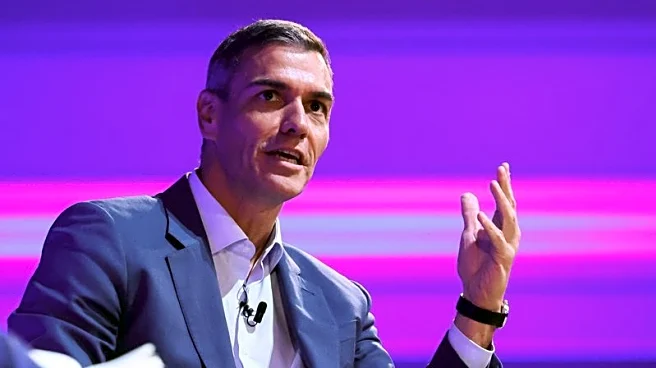
Prime Minister Pedro Sánchez of Spain has reiterated his country's opposition to the ongoing Middle East conflict, following President Trump's threats to cut off trade with Spain. The tension arose after Spain refused to allow U.S. military use of its
bases for operations against Iran. In a national address, Sánchez criticized the bombings as reckless and illegal, emphasizing Spain's commitment to peace and its refusal to be complicit in actions contrary to its values. The situation has strained relations between the U.S. and Spain, both NATO allies.
Why It's Important?
This development highlights a significant diplomatic rift between Spain and the U.S., with potential economic and political consequences. Spain's stance could lead to a reevaluation of its role within NATO and its relationship with the U.S. The trade threats from President Trump could impact Spain's economy, which is intertwined with U.S. trade. Additionally, the situation reflects broader tensions within the European Union regarding military involvement and defense spending, potentially influencing EU policies and international relations.
What's Next?
Spain may seek support from the European Union to mitigate the impact of potential U.S. trade sanctions. The EU's response could shape future diplomatic and economic strategies within the bloc. The situation may also prompt discussions within NATO about member countries' military commitments and defense spending, potentially leading to policy adjustments. Spain's position could influence other countries' approaches to international conflicts, affecting global diplomatic dynamics.