



What's Happening?
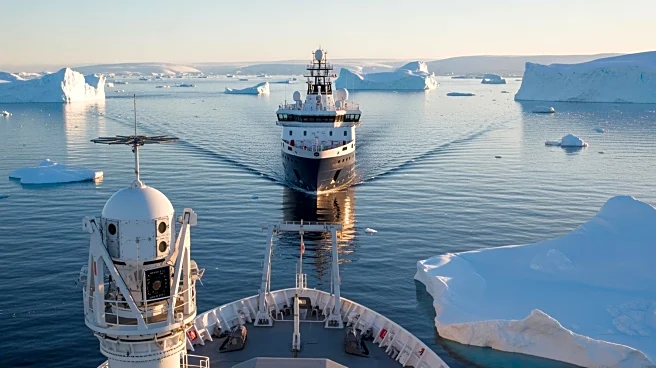
Canada is preparing for a second expedition to Antarctica in 2026, following its first-ever naval deployment to the region earlier this year. The Royal Canadian Navy, led by Vice-Admiral Angus Topshee, is planning this expedition to join Chile's Antarctic mission.
The upcoming expedition aims to enhance Canada's research capabilities and diplomatic presence in Antarctica. The mission will be shorter, lasting about two weeks, and will involve Canadian researchers aboard a Chilean ship. This initiative is part of Canada's broader interest in understanding climate change impacts at both poles. During a recent conference in Calgary, Canadian scientists discussed the achievements of the Canadian Antarctic Research Expedition (CARE 2025), which involved 15 scientists studying climate change effects in Antarctica. Preliminary findings from this expedition indicate a build-up of microplastics in Antarctic waters, with levels slightly higher than those in the Canadian Arctic.
Why It's Important?
This second expedition underscores Canada's commitment to scientific research and international collaboration in understanding climate change. By participating in Antarctic research, Canada can contribute valuable data on environmental changes and their global impacts. The presence of microplastics in Antarctic waters highlights the pervasive nature of pollution and its potential effects on marine ecosystems. This research could inform global environmental policies and strategies to mitigate pollution. Additionally, Canada's involvement in Antarctic expeditions strengthens its diplomatic ties with South American countries, fostering cooperation in scientific and environmental initiatives. The expedition also aligns with Canada's strategic interests in polar regions, where climate change is rapidly altering environmental conditions.
What's Next?
The Canadian Navy and research institutions will continue planning the logistics and objectives of the upcoming expedition. Researchers are expected to collaborate with Chilean counterparts to maximize the scientific output of the mission. The findings from CARE 2025 will be publicly released in the coming months, providing further insights into the environmental conditions in Antarctica. These results may prompt discussions on international efforts to address microplastic pollution and its broader ecological impacts. As Canada enhances its research presence in Antarctica, it may seek additional partnerships with other countries engaged in polar research, potentially leading to more comprehensive studies and collaborative projects.