


What's Happening?
The U.S. military has reported a series of airstrikes targeting Islamic State (IS) group positions in Syria. These strikes are in retaliation for a December ambush that resulted in the deaths of two U.S. soldiers and an American civilian interpreter.
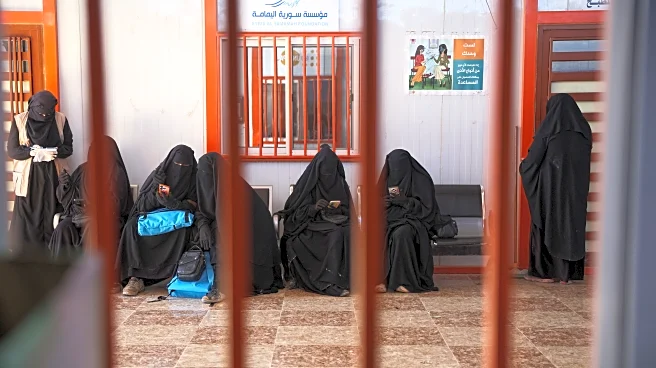
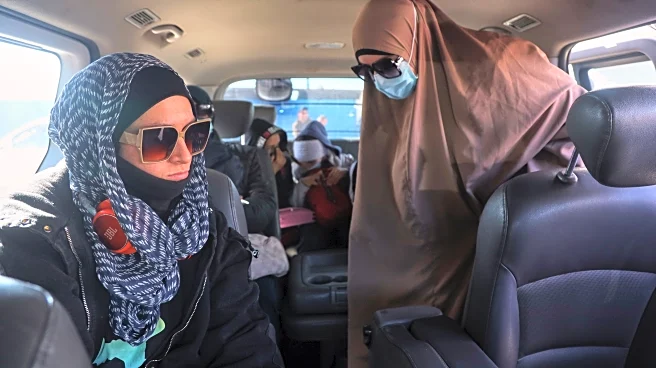
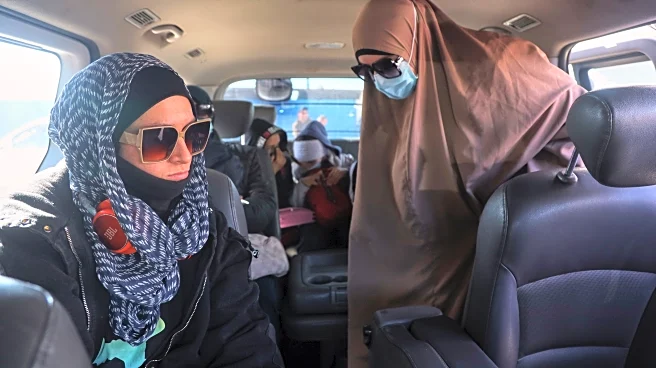
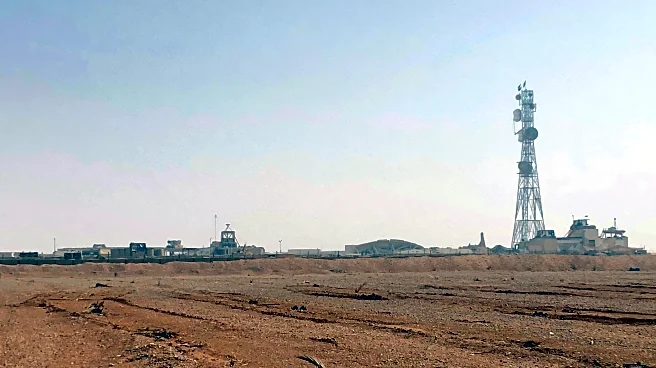
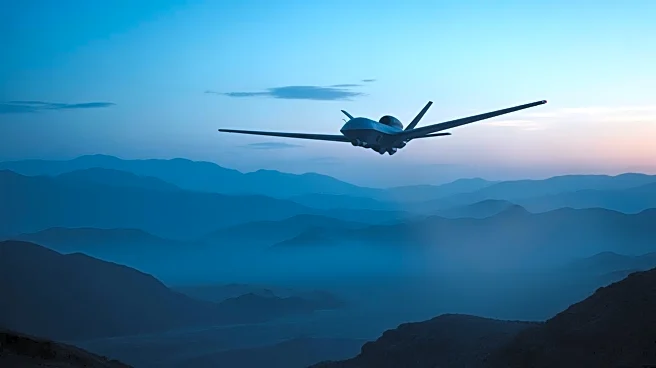
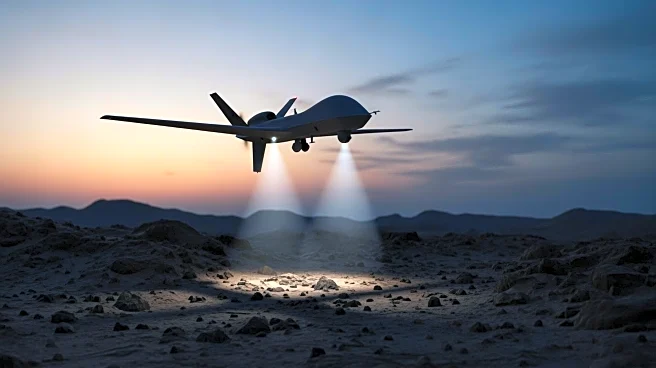
According to U.S. Central Command, American aircraft executed 10 strikes against over 30 IS targets, including weapons storage facilities and other infrastructure, between February 3 and the preceding Thursday. The operation has led to the death or capture of at least 50 IS members, with more than 100 targets hit since the strikes began. The December attack claimed the lives of Sgt. Edgar Brian Torres-Tovar, Sgt. William Nathaniel Howard, and Ayad Mansoor Sakat, the civilian interpreter. Additionally, the Syrian Defense Ministry announced that government forces have taken control of a base in eastern Syria previously operated by U.S. troops. The U.S. military has also completed the transfer of thousands of IS detainees from Syria to Iraq, where they are expected to face trial.
Why It's Important?
These airstrikes underscore the ongoing U.S. commitment to combating IS in the region, despite the complex geopolitical landscape in Syria. The operation highlights the U.S. military's strategic response to threats against its personnel and interests abroad. The transfer of IS detainees to Iraq for trial represents a significant step in addressing the legal and security challenges posed by captured militants. This move is likely to be welcomed by the U.S.-led coalition, which has been engaged in efforts to dismantle IS's operational capabilities. The developments also reflect the broader U.S. strategy of maintaining pressure on IS while navigating the intricate dynamics of Syrian and regional politics.
What's Next?
The U.S. military is expected to continue its operations against IS in Syria, focusing on dismantling the group's remaining infrastructure and leadership. The transfer of detainees to Iraq may lead to further legal proceedings and trials, potentially impacting regional security dynamics. The Syrian government's control of the former U.S. base could alter the balance of power in the region, influencing future military and diplomatic engagements. Stakeholders, including regional allies and adversaries, will likely monitor these developments closely, assessing their implications for broader Middle Eastern stability.