






What's Happening?
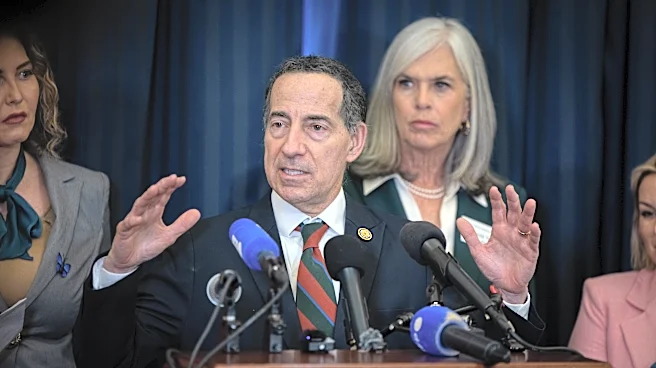
Towson University's Ben & Myrna Cardin Center for Civic Engagement & Civil Discourse is scheduled to host Representative Jamie Raskin. The event will focus on discussing the outcomes of the recent midterm elections and their implications for the future
of American governance. This discussion is part of Towson University's broader commitment to fostering civic engagement and civil discourse within its community. The university has emphasized its role as a leader in promoting democratic participation and providing opportunities for dialogue across various backgrounds and political affiliations. This event follows other civic-minded initiatives at the university, including an Economic Outlook Forum that examined the potential impact of election results on economic policy and regional growth, and an upcoming TU Community Conversation to reflect on the election's impact and explore sustained civic engagement. The university also served as a polling location and will host the inauguration of the next Baltimore County Executive, reinforcing its role as an anchor institution for Maryland.
Why It's Important?
This event is significant as it provides a platform for in-depth analysis of the midterm election results by a prominent political figure, Representative Jamie Raskin. Such discussions are crucial for understanding the evolving political landscape and its potential effects on national governance and policy direction. For students, faculty, and staff at Towson University, it offers a direct opportunity to engage with contemporary political issues and gain insights into the mechanisms of American democracy. The focus on civic engagement and civil discourse is vital in an era often characterized by political polarization, promoting respectful dialogue and informed participation. By hosting such events, educational institutions like Towson University contribute to a more informed citizenry, which is essential for a healthy democratic society. The analysis of election outcomes can influence public perception, policy debates, and future political strategies, making this discussion a key moment for civic education.
What's Next?
Following Representative Jamie Raskin's discussion, Towson University will continue its series of civic engagement events. The Office for Social Impact is slated to host its annual TU Community Conversation. This upcoming event, scheduled for Wednesday, December 2, will further reflect on the election's impact and explore sustainable methods for engaging in civic life. These ongoing initiatives indicate a sustained commitment by Towson University to foster an environment of civic responsibility and action. The university's role as a polling location and its upcoming hosting of the Baltimore County Executive's inauguration further solidify its position as a central hub for civic activities in the region. The insights gained from Representative Raskin's discussion are likely to inform subsequent conversations and potentially influence student and community involvement in political and social issues.
Beyond the Headlines
The initiative by Towson University to host discussions on election outcomes, particularly with figures like Representative Jamie Raskin, extends beyond mere political commentary. It underscores a broader educational mission to cultivate critical thinking and informed civic participation among its community members. In an increasingly complex political environment, providing structured forums for civil discourse helps to bridge ideological divides and encourages a more nuanced understanding of governance. This approach can foster a generation of citizens who are not only aware of political developments but also equipped to engage constructively with them. The emphasis on respectful dialogue, as highlighted by the university's president, is crucial for strengthening democratic norms and counteracting the divisive rhetoric often prevalent in contemporary political discourse. Such institutional efforts play a vital role in shaping a more engaged and responsible citizenry, contributing to the long-term health of democratic processes.