








What's Happening?
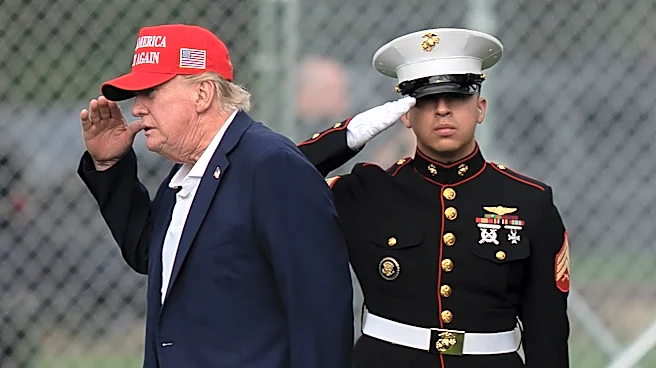
Analysts fear that President Trump's consistent criticism of NATO and his administration's perceived unwillingness to defend Europe could embolden Russian President Vladimir Putin. This concern arises as Russia continues its war in Ukraine, demonstrating
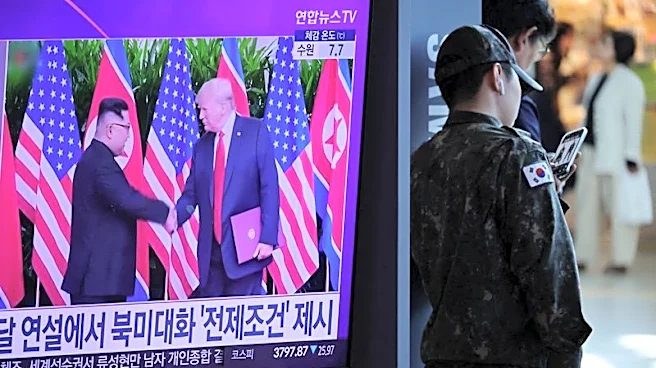
a successful transition to a wartime economy capable of producing advanced weapons despite sanctions. Intelligence reports suggest Russia might be preparing for a 'limited incursion' against a NATO member to exploit perceived divisions within the alliance. President Trump has repeatedly called NATO 'obsolete' and criticized member states for not contributing enough, particularly in the context of the U.S. war against Iran. His administration has also initiated a 'six-month review' of U.S. military commitments to Europe, linking them to NATO spending and support for President Trump's broader economic policies. A 'loyalty test' has reportedly been sent to NATO members, inquiring about their public support for President Trump's foreign policy.
Why It's Important?
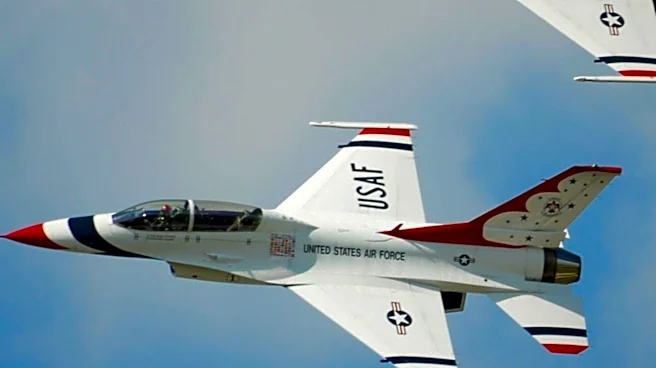
President Trump's skepticism towards NATO's collective defense principle, particularly Article 5, could undermine the alliance's deterrence capabilities. Article 5 states that an armed attack against one member is considered an attack against all, requiring mutual assistance. If the U.S. signals a reduced commitment, it could create a vulnerability that Russia might exploit, potentially leading to a wider conflict in Europe. The U.S. military's willingness to defend the alliance is crucial, as NATO's overall qualitative edge over Russia largely depends on it. A perceived weakening of U.S. resolve could encourage Russia to test NATO's unity, especially against smaller member states. Furthermore, the U.S. Air Force's unique capability in 'suppression of enemy air defense' and 'destruction of enemy air defense' campaigns is vital for protecting European cities from Russian ballistic missiles, making U.S. commitment indispensable.
What's Next?
The U.S. 'six-month review' of military commitments to Europe, set to conclude in December, will be a critical indicator of future U.S. engagement with NATO. The results of this review, and the responses from NATO member states to the 'loyalty test,' could significantly shape the alliance's future. Russia is expected to continue its military advancements and potentially escalate its 'hybrid warfare' tactics against European targets. NATO will likely maintain its heightened defensive posture along its eastern flank, with ongoing efforts to increase military production and improve air defense capabilities. The ongoing war in Ukraine will continue to serve as a testing ground for Russian military strategies and Western responses, influencing the broader geopolitical landscape.
Beyond the Headlines
The current situation highlights a deeper ideological struggle within the transatlantic alliance regarding burden-sharing and the nature of collective security. President Putin's increasingly apocalyptic worldview, characterized by his rhetoric of Russia as the 'Third Rome' fighting 'satanic' Western forces, suggests a long-term strategic objective to diminish NATO's influence and reassert Russia's sphere of influence in Eastern and Central Europe. The debate over NATO's relevance and the U.S. role within it extends beyond immediate military concerns, touching upon fundamental questions of international cooperation, national sovereignty, and the future of global order. The potential for a 'limited incursion' by Russia against a NATO member could trigger a profound crisis, forcing the alliance to confront its internal divisions and reaffirm its core principles under extreme pressure.