
What's Happening?
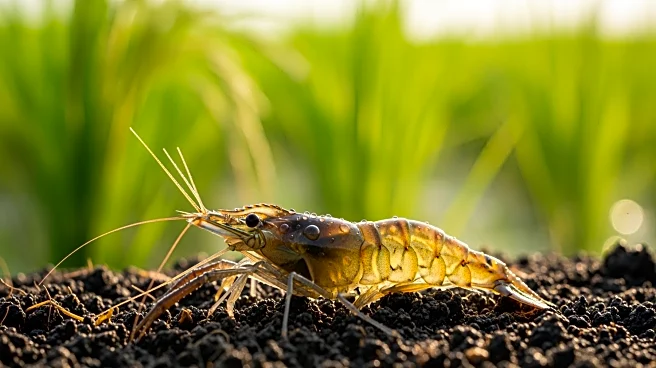
In Naogaon, Bangladesh, Raju Sardar, a farmer from Dighirpar village, has successfully cultivated freshwater prawns, also known as golda chingri, alongside carp fish. This initiative began in June of the
previous year when Sardar received 500 prawn fry from a local NGO and supplemented them with an additional 1,000 fry. Despite initial skepticism from the community, Sardar's meticulous management of water quality and feeding has led to rapid growth of the prawns. Currently, 7 to 8 prawns weigh one kilogram, a satisfactory result for this type of farming. Sardar anticipates a total production of 120 to 130 kilograms, potentially earning him Tk120,000 to Tk140,000 at current market prices. His success has turned his pond into a training center, attracting 30 to 40 farmers from the region who are now interested in prawn farming.
Why It's Important?
The success of Raju Sardar's freshwater prawn farming represents a significant shift in local agricultural practices in Naogaon. By integrating prawn farming with traditional carp fish cultivation, farmers can potentially double their income from the same pond space. This model not only promises increased economic returns but also encourages sustainable farming practices. The initiative has sparked interest among local farmers, leading to a broader adoption of prawn farming, which could enhance local employment, boost fish production, and stimulate the regional economy. The involvement of local NGOs and support from organizations like PKSF further underscores the potential for scaling this model across the region, offering a replicable framework for other agricultural communities.
What's Next?
Following the success of Raju Sardar, local fisheries officers and development organizations are likely to promote integrated farming practices more widely. This could involve training programs and workshops to educate farmers on best practices for prawn and carp farming. Additionally, there may be increased investment in infrastructure and resources to support this growing sector. As more farmers adopt this model, there could be a significant transformation in the local agricultural landscape, with potential policy support from government agencies to facilitate this transition. The success story may also attract attention from national and international agricultural bodies interested in sustainable and profitable farming practices.
Beyond the Headlines
The success of freshwater prawn farming in Naogaon highlights the potential for innovative agricultural practices to transform rural economies. It underscores the importance of local knowledge and community-driven initiatives in achieving sustainable development goals. The model also raises questions about the scalability of such practices in other regions with similar environmental conditions. Furthermore, it emphasizes the role of NGOs and local government in supporting agricultural innovation and the need for policies that encourage experimentation and risk-taking among farmers. This development could lead to a reevaluation of traditional farming methods and inspire similar initiatives in other parts of the world.