


What's Happening?
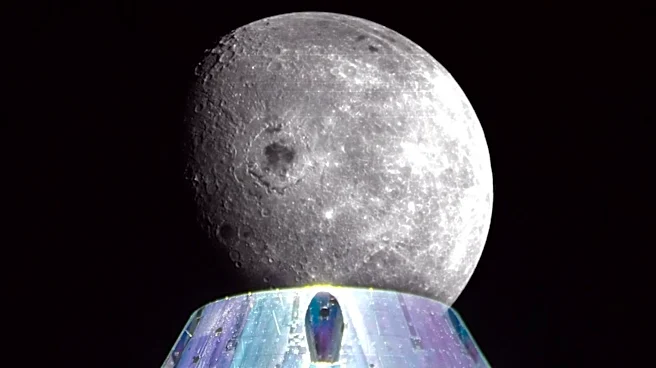
NASA Ames Research Center in Mountain View, California, is actively using advanced simulators to prepare for the Artemis mission, which aims to return humans to the Moon for the first time since 1972. Engineers and researchers at the Flight and Guidance
Simulation Laboratories are employing tools like the Vertical Motion Simulator, described as the world's largest of its kind, to replicate the conditions astronauts will experience during a lunar landing. Haroon Khan, a human spaceflight simulation research integrator, explained that the simulator allows potential astronauts to feel the motion associated with a Moon landing. NASA astronaut Doug 'Wheels' Wheelock emphasized the simulator's crucial role in his training, highlighting its nearly unbounded vertical motion capabilities. The information gathered from these simulations and related studies will be shared with teams in Houston to refine spacecraft systems and astronaut training protocols for the Artemis mission, scheduled for 2028.
Why It's Important?
The rigorous simulation and training efforts at NASA Ames Research Center are critical for the success and safety of the Artemis mission, which represents a significant leap forward in U.S. space exploration. By meticulously replicating lunar landing conditions, NASA aims to mitigate risks and optimize astronaut performance, directly impacting the lives of the crew and the substantial investment in the mission. This initiative underscores the U.S.'s commitment to leading in space exploration and its dedication to leveraging advanced technology for human spaceflight. The data and insights derived from these simulations will not only inform the design of future spacecraft and mission profiles but also set new standards for astronaut training. The success of Artemis could inspire a new generation of scientists and engineers, bolster the U.S. aerospace industry, and potentially lead to further scientific discoveries and technological advancements that benefit various sectors on Earth.
What's Next?
NASA Ames Research Center will continue to gather and analyze data from its advanced simulators, sharing these findings with the broader Artemis mission teams in Houston. This ongoing research will directly influence the final designs of spacecraft systems, operational procedures, and the comprehensive training regimen for astronauts. As the Artemis mission approaches its scheduled launch in 2028, further simulation exercises will likely become more frequent and complex, incorporating the latest data and technological refinements. The insights gained will be crucial for ensuring the safety and effectiveness of the crewed lunar landing. Additionally, the success of these preparatory phases will be a key indicator of the overall readiness for the mission, potentially influencing public and political support for future deep-space exploration initiatives.
Beyond the Headlines
The use of advanced simulation technology at NASA Ames extends beyond mere training; it represents a fundamental shift in how complex, high-stakes missions are prepared. By creating highly realistic virtual environments, NASA is not only preparing astronauts for physical challenges but also for cognitive and psychological demands of lunar exploration. This approach has broader implications for other high-risk fields, such as aviation, defense, and even complex industrial operations, where human error can have catastrophic consequences. The development of such sophisticated simulators also drives innovation in virtual reality, haptics, and human-machine interface design, technologies that could eventually find applications in everyday life. Furthermore, the Artemis mission, supported by this advanced training, symbolizes a renewed national focus on space, potentially fostering international collaborations and competition, and pushing the boundaries of human endeavor and scientific understanding.