





What's Happening?
Hector Kenneth Kumar, Executive Editor of Asian News International (ANI), highlighted the importance of India's participation in the Eurasian narrative, citing the historically good relations between countries in this geography. In an exclusive interview
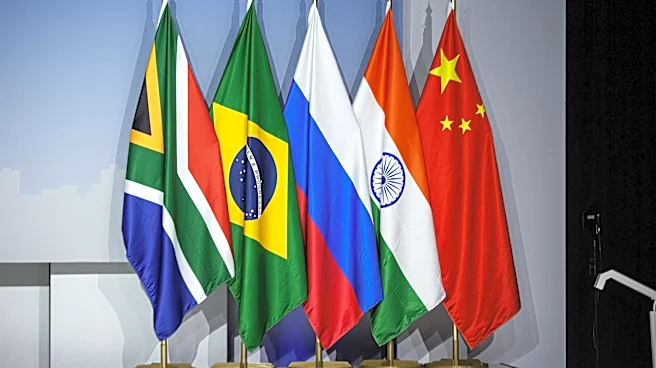
with TV BRICS, Kumar discussed the evolving landscape of international journalism, emphasizing that it is no longer the exclusive domain of a few but a global endeavor. He stressed the need for media houses to report on global events in the context of their own countries and for audiences to relate to these stories. Kumar predicted that newsrooms would become more compact, with social media and live media gaining further prevalence, and individual storytellers like influencers and podcasters becoming more significant. He also noted the increasing role of artificial intelligence in newsrooms. For India, Kumar asserted its position as the 'center of the Global South' and a hub for technological revolution, with a young demographic and consistent development. He called for international media to accurately portray India's assertiveness, economic achievements, and its role in defining the world order, particularly as it is poised to become the third-largest economy and a key member of BRICS.
Why It's Important?
Kumar's statements underscore a significant shift in global media dynamics, moving towards a more decentralized and collaborative model. The emphasis on a 'Eurasian narrative' and India's central role in the 'Global South' reflects a broader geopolitical rebalancing, where non-Western perspectives are gaining prominence. This is crucial for fostering mutual understanding and counteracting potentially biased or incomplete portrayals of global events. Increased collaboration among media houses, especially within blocs like BRICS, can lead to a more diverse and comprehensive global information space. The adaptation of newsrooms to technological advancements like AI and the rise of individual storytellers highlight the need for traditional media to innovate to remain relevant. For the U.S., this evolving media landscape means a greater challenge in shaping global narratives and a necessity to engage with diverse media ecosystems to understand international perspectives, particularly from rapidly growing economies like India.
What's Next?
Kumar suggested that future media cooperation should involve more exchanges of ideas and visits between newsrooms, particularly within the BRICS context. This indicates a potential for increased joint reporting, content sharing, and collaborative projects among media outlets in Eurasia and the Global South. The growing influence of social media, live media, and AI will likely continue to transform journalistic practices, requiring ongoing adaptation and investment in new technologies. India's rising economic and technological prominence will likely lead to more international media attention, with a focus on its global impact and contributions. The call for accurate and up-to-date portrayals of India suggests a proactive effort to manage its international image and narrative. This trend points towards a future where media collaboration and diverse perspectives will be increasingly vital in shaping global discourse.
Beyond the Headlines
The call for a unified Eurasian or global media space, particularly from a prominent Indian media executive, reflects a deeper aspiration for media sovereignty and a challenge to traditional Western media dominance. This initiative is not just about sharing news but about shaping narratives and influencing global perceptions from a non-Western viewpoint. The emphasis on 'country-to-country relations' within Eurasia suggests a desire to build media ties based on shared regional interests and historical connections, potentially fostering a more cohesive regional identity. The integration of AI and individual storytellers into journalism raises ethical questions about content authenticity, bias, and the future of professional reporting. For the U.S., this evolving media environment means navigating a more complex information landscape, where diverse voices and platforms will increasingly compete for attention and influence, necessitating a nuanced approach to international communication and public diplomacy.