



What's Happening?
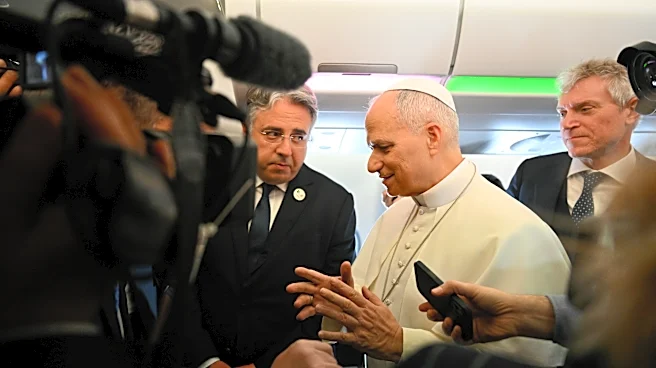
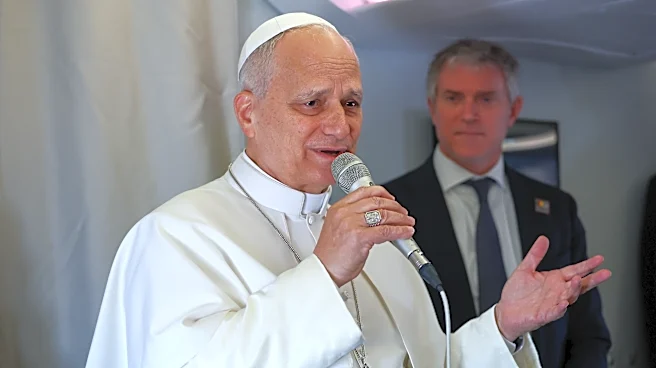
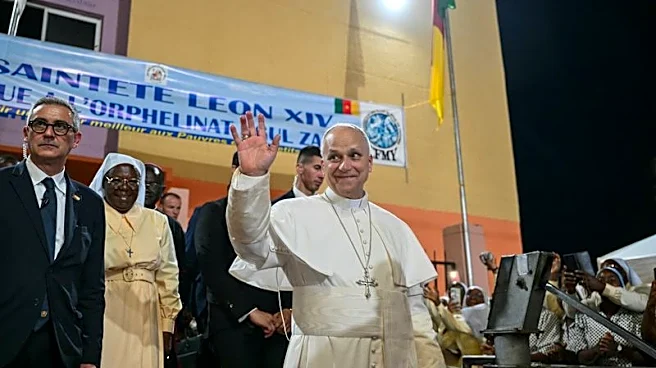
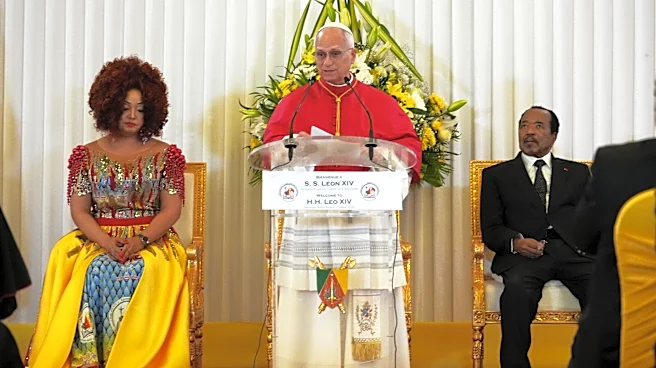
Pope Leo XIV has stated that he is not interested in debating President Trump regarding the Iran war, emphasizing his commitment to preaching peace. During his tour of Africa, Leo addressed the ongoing narrative surrounding Trump's critiques of his peace message.
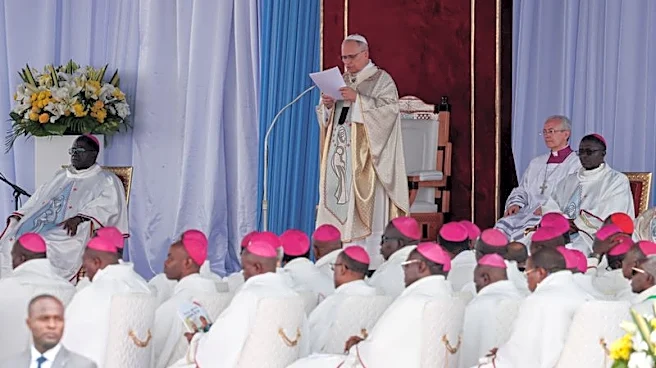
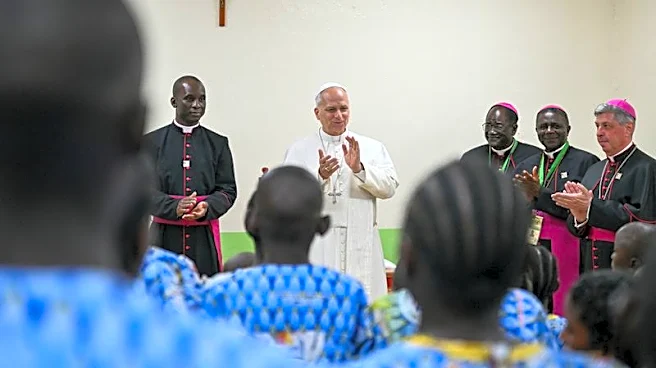
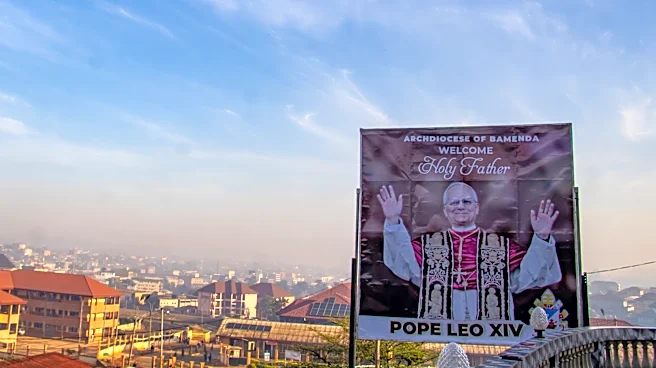
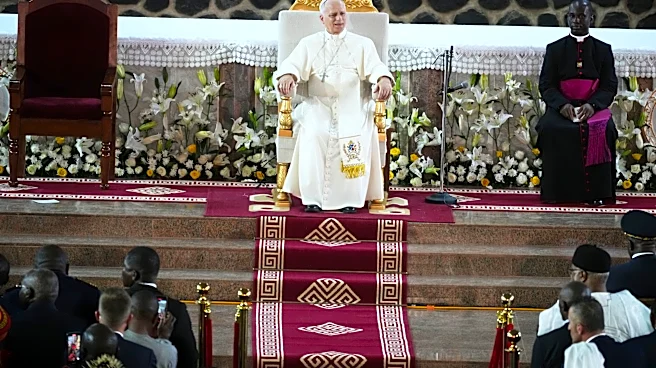
Trump had criticized Leo's stance on peace, accusing him of being lenient on crime and aligning with leftist views. Leo clarified that his peace advocacy is not directed at Trump but is part of a broader Gospel message. He denounced the use of religious justification for war and specifically criticized Trump's threat to annihilate Iranian civilization. Leo's remarks were made during a peace meeting in Bamenda, Cameroon, a region affected by separatist conflict. Despite the controversy, Leo remains focused on his pastoral mission in Africa, promoting justice and peace.
Why It's Important?
The exchange between Pope Leo XIV and President Trump highlights the intersection of religion and politics in global conflict narratives. Leo's refusal to engage in a debate with Trump underscores the Catholic Church's stance on peace and dialogue, which contrasts with political rhetoric that may justify military actions. This situation reflects broader tensions between religious leaders advocating for peace and political figures who may prioritize strategic interests. The Pope's continued advocacy for peace could influence public opinion and encourage dialogue over conflict, potentially impacting international relations and policy decisions. The Vatican's emphasis on peace across all global conflicts, not just the Iran war, positions the Church as a moral voice in geopolitical matters.
What's Next?
Pope Leo XIV will continue his tour in Africa, visiting Angola next, where he plans to meet with President Joao Lourenco and deliver a speech to government authorities. His message of peace is particularly relevant in Angola, a country recovering from a long civil war. Leo's ongoing advocacy may prompt further discussions among political leaders and religious communities about the role of faith in promoting peace. The Vatican's stance could influence diplomatic efforts and encourage international cooperation in conflict resolution. As Leo continues his tour, his interactions with African leaders and communities may further highlight the importance of peace and justice in global affairs.