





What's Happening?
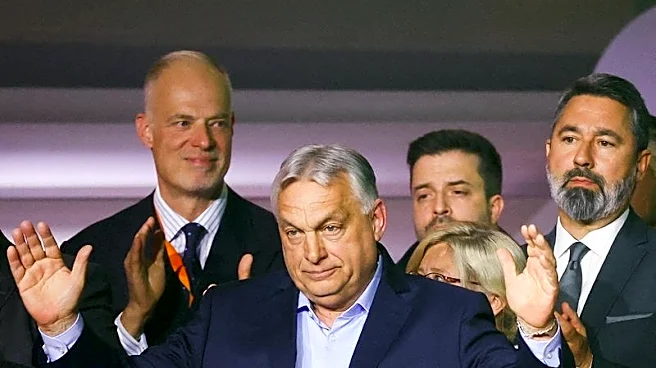
Hungarian Prime Minister Viktor Orbán has conceded defeat after 16 years in power, following a significant voter turnout that favored the opposition. The election results indicate a potential 'super-majority' victory for Péter Magyar's Tisza movement,
which has united various opposition forces. The movement campaigned on themes of fighting corruption and re-integrating Hungary into the European mainstream. Orbán's concession came less than three hours after polls closed, with ongoing ballot counts suggesting a two-thirds majority for Magyar. This majority could enable Magyar to reverse constitutional changes made by Orbán that have been criticized for undermining judicial independence and entrenching Fidesz party control.
Why It's Important?
The election outcome is pivotal for Hungary and its relationship with the European Union. Orbán's tenure was marked by frequent clashes with EU partners, particularly over issues like funding Ukraine's budget and war efforts. His administration faced accusations of corruption and misuse of EU funds, which he denied. The shift in power could lead to significant policy changes, potentially improving Hungary's ties with the EU. The international attention on this election, including involvement from U.S. political figures, underscores its broader geopolitical significance. A new government under Magyar could alter Hungary's stance on key international issues, impacting EU dynamics and regional stability.
What's Next?
If Péter Magyar's Tisza movement secures a two-thirds majority, it is expected to initiate reforms to undo Orbán's constitutional changes. This could restore judicial independence and alter the political landscape in Hungary. The new government may also seek to strengthen Hungary's integration with the EU, potentially leading to shifts in foreign policy and economic strategies. Observers will be watching for Magyar's approach to governance and how it aligns with EU expectations. The transition of power could also influence Hungary's domestic policies, particularly in areas like anti-corruption measures and democratic governance.