



What's Happening?
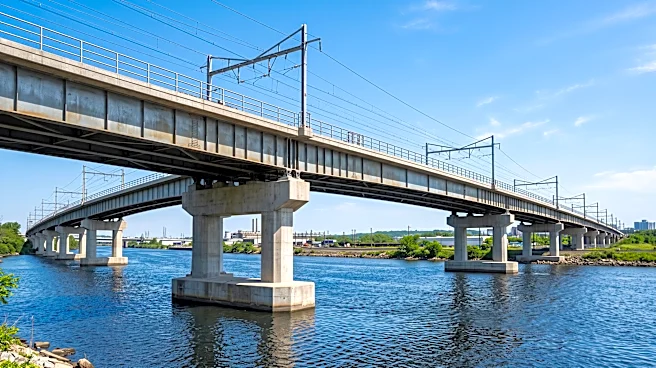
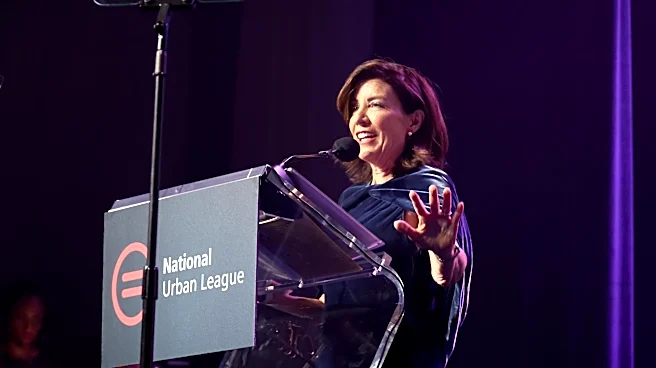
Governor Kathy Hochul has announced the completion of major construction work on the transformative Van Wyck Expressway Project in New York. This $804 million third phase of the project included the construction of managed-use lanes and the replacement,
rehabilitation, or construction of 10 bridges spanning the Van Wyck Expressway or carrying it over other roadways. Additionally, several exit and entrance ramps have been reconfigured to enhance safety, and the area's sewer system has been upgraded to better handle stormwater runoff and prevent flooding in southeast Queens. The drainage improvements involved a $135 million double-barrel sewer segment, a collaborative effort with the New York City Department of Environmental Protection, specifically addressing chronic flooding issues in the region. The overall modernization, overseen by the New York State Department of Transportation (NYSDOT), is one of the state's most complex projects, aiming to improve safety, vehicle flow, and reduce congestion between John F. Kennedy International Airport and the Kew Gardens Interchange.
Why It's Important?
This significant infrastructure project holds substantial importance for New York, particularly for commuters and travelers to and from John F. Kennedy International Airport. The introduction of managed-use lanes, which will function as high-occupancy vehicle (HOV) lanes, is expected to alleviate traffic congestion and improve travel times. The reconfigured highway geometry, including longer entrance and exit ramps, aims to prevent queueing on the highway and reduce weaving, thereby enhancing safety and efficiency. Furthermore, the upgraded drainage systems are crucial for bolstering resiliency against severe weather events and mitigating chronic flooding in southeast Queens, protecting both property and public safety. The project's comprehensive nature, involving 23 rehabilitated or replaced bridges, signifies a long-term investment in the region's transportation network, supporting economic activity and improving the quality of life for residents and visitors alike.
What's Next?
With the major construction work completed, the newly implemented managed-use lanes on the Van Wyck Expressway will become operational. These lanes will be accessible to private vehicles, taxis, and for-hire vehicles with a driver and at least one passenger, as well as buses. The focus will now shift to monitoring the effectiveness of these new traffic patterns and the upgraded infrastructure in reducing congestion and improving safety. Continued maintenance and potential minor adjustments to traffic management technology will likely follow. The successful completion of this project may also serve as a model for future large-scale infrastructure initiatives in New York, demonstrating the state's commitment to modernizing its transportation systems and addressing critical urban challenges like traffic flow and flood control.
Beyond the Headlines
The Van Wyck Expressway Project represents more than just a road construction effort; it signifies a broader commitment to urban resilience and sustainable infrastructure development. The substantial investment in drainage improvements, particularly the $135 million double-barrel sewer segment, highlights a proactive approach to climate change adaptation and flood mitigation in densely populated areas. This aspect of the project underscores the increasing recognition that modern infrastructure must not only facilitate transportation but also protect communities from environmental threats. The project's complexity and multi-phase execution also reflect the intricate challenges of urban planning and development, requiring extensive coordination between state and city agencies. The long-term impact will likely include enhanced regional connectivity, reduced carbon emissions from idling vehicles, and a more robust infrastructure capable of supporting future growth and environmental pressures.