






What's Happening?
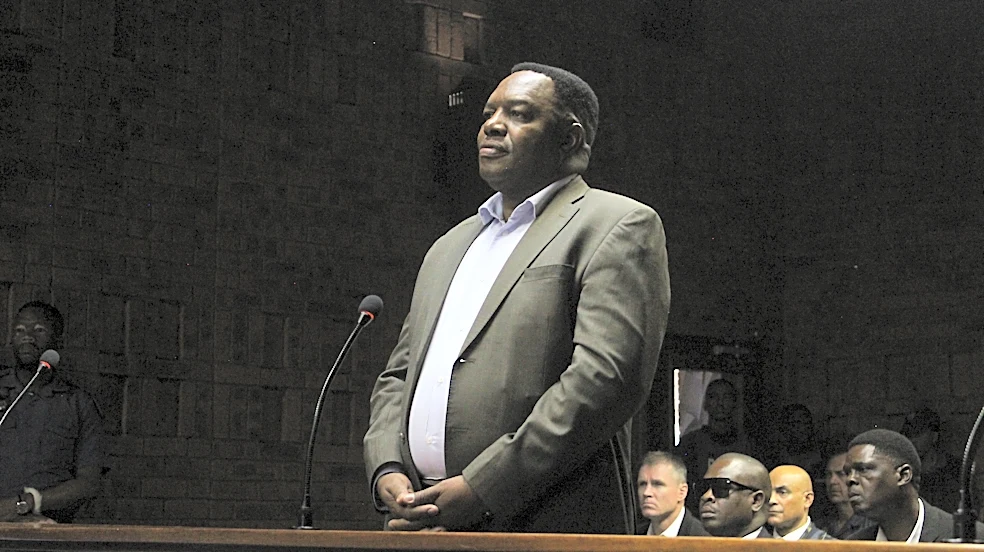
Former South African President Thabo Mbeki has denied allegations that he obstructed investigations and prosecutions of apartheid-era crimes. Testifying at a judicial inquiry in Johannesburg, Mbeki stated that claims of him ordering prosecutors to halt
cases or striking secret deals to protect former security officers are a 'complete fabrication.' He asserted that the National Prosecuting Authority (NPA) should explain its failure to pursue cases referred by the Truth and Reconciliation Commission (TRC). Mbeki, who served as president from 1999 to 2008, acknowledged meeting with former military and police officers but maintained these discussions were to encourage their participation in the TRC, not to shield them from justice. This inquiry was initiated by President Cyril Ramaphosa in April after victims' families and survivors sued the government for its inaction on unresolved killings and disappearances from the apartheid era. The TRC, established in 1996, offered amnesty for full disclosure of politically motivated crimes, but many cases referred for prosecution have remained unresolved for decades.
Why It's Important?
This judicial inquiry is crucial for South Africa as it addresses long-standing grievances and seeks to provide justice for victims of apartheid-era atrocities. The allegations against former President Mbeki highlight the complex and often contentious balance between national reconciliation and accountability for past crimes. The failure to prosecute these cases has left many victims' families without closure, raising questions about the integrity of the post-apartheid justice system. The inquiry's findings could significantly impact public trust in government institutions and the rule of law. It also underscores the ongoing challenges of transitional justice, where political considerations can sometimes overshadow the pursuit of criminal accountability. The outcome may set a precedent for how historical injustices are addressed in countries transitioning from oppressive regimes, influencing future approaches to reconciliation and justice globally.
What's Next?
Former President Mbeki's testimony is scheduled to continue, with three former Cabinet ministers expected to testify later in the week. The appearance of former President Jacob Zuma, initially slated for Thursday, has been postponed to an unconfirmed date. The inquiry will continue to gather evidence and testimonies from various individuals involved in the post-apartheid government and justice system. The National Prosecuting Authority will likely face increased scrutiny regarding its handling of TRC-referred cases. The inquiry's final report and recommendations could lead to renewed efforts to prosecute outstanding apartheid-era crimes, potentially bringing long-awaited justice to victims and their families. It may also prompt legislative or policy changes to prevent future political interference in judicial processes and ensure greater accountability for historical human rights abuses.
Beyond the Headlines
The inquiry delves into the deeper implications of South Africa's post-apartheid transition, particularly the tension between the pursuit of justice and the imperative of national reconciliation. The TRC's approach, offering amnesty in exchange for truth, aimed to foster healing but left a complex legacy regarding criminal accountability. The current inquiry suggests a societal shift towards prioritizing justice for victims, even decades after the events. This re-evaluation of historical compromises highlights the ethical dilemma of balancing peace with justice. The allegations of political interference in prosecutions raise fundamental questions about the independence of the judiciary and the potential for executive overreach in democratic transitions. The outcome could redefine the narrative of South Africa's post-apartheid era, emphasizing accountability as a cornerstone of true reconciliation and potentially influencing how other nations confront their own histories of state-sponsored violence.