




What's Happening?
The upcoming November midterms in Arizona's 6th Congressional District are drawing significant attention, with independent voters poised to play a crucial role. Incumbent Republican Congressman Juan Ciscomani is being challenged by Democrat Joanna Mendoza.
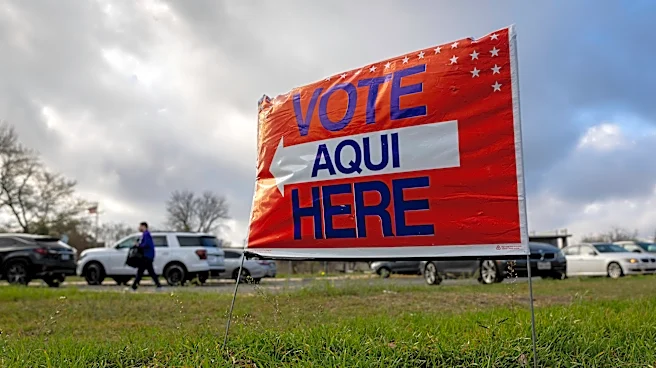
Maricopa County alone has over 900,000 registered voters with no party affiliation, a number exceeding both registered Democrats and Republicans. Thom Reilly, co-director of the Center for an Independent and Sustainable Democracy at ASU, highlights that this election will be heavily influenced by young non-partisans. His research indicates a growing trend of voters, particularly Gen Z, identifying as independent, with 49% of Gen Z voters in the 2024 election defining themselves as such. This rejection of traditional party affiliation is a national trend, reflecting disillusionment with the two-party system. Arizona has a history of an independent streak, exemplified by figures like John McCain and Kyrsten Sinema, who often bucked their respective parties. Candidates are increasingly appealing to this unaffiliated bloc, as seen in Senator Mark Kelly's previous campaign, where he emphasized being an 'Arizonan' rather than a Democrat.
Why It's Important?
The significant sway of independent voters in Arizona's 6th Congressional District race underscores a broader national shift in the political landscape. The growing number of unaffiliated voters, particularly among younger generations, challenges the traditional two-party dominance and forces candidates to broaden their appeal beyond partisan lines. This trend could lead to more moderate political discourse and policy-making, as candidates must cater to a diverse electorate that prioritizes issues over party loyalty. The outcome in Arizona's 6th District could serve as a bellwether for future elections, indicating the increasing necessity for campaigns to engage with and win over non-partisan voters. For political parties, this signals a need to re-evaluate their strategies and platforms to attract and retain voters who are increasingly disengaged from partisan politics. The focus on issues like affordability and the economy, which are top concerns for independents, could shape campaign agendas and legislative priorities.
What's Next?
As the November midterms approach, both Congressman Ciscomani and Joanna Mendoza will intensify their efforts to court independent voters. Campaign strategies are likely to focus on issues that resonate with this demographic, such as economic concerns and local issues, rather than strictly adhering to party platforms. The debate between Ciscomani and Mendoza, which touched on economic issues, is a preview of the types of discussions that will dominate the campaign. The involvement of prominent figures like former U.S. Transportation Secretary Pete Buttigieg, who campaigned for Mendoza, indicates the national importance placed on this race. Predictions for how independents will vote remain challenging, though historical trends suggest that the party of the sitting president often incurs losses in Congress during midterms. The candidates' ability to effectively address the concerns of unaffiliated voters will be critical in determining the election's outcome.
Beyond the Headlines
The rise of independent voters has profound implications for the future of American democracy. It suggests a potential weakening of traditional party structures and an increased demand for political accountability and responsiveness. This shift could lead to a more fluid and unpredictable electoral environment, where individual candidates and their policy positions hold more weight than party affiliation. The challenge for the political system will be to adapt to this evolving electorate, ensuring that the voices of independent voters are adequately represented and that their concerns are addressed. This trend also raises questions about the long-term viability of the two-party system and whether it can effectively serve a populace that is increasingly rejecting partisan labels. The emphasis on local issues and candidate-specific appeals, rather than broad party platforms, could foster a more localized and community-driven approach to politics.