




What's Happening?
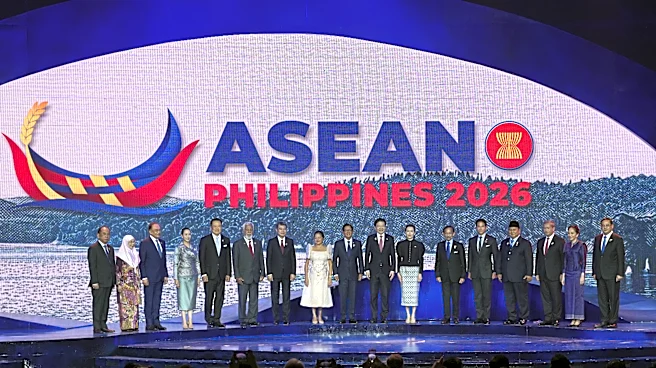
The Association of Southeast Asian Nations (ASEAN) has agreed to implement a joint oil product stockpiling scheme, with Indonesia and Thailand designated as primary storage hubs. This initiative, slated to commence as early as 2027, aims to bolster regional
energy security, particularly in response to supply disruptions stemming from the conflict in Iran. The system will operate on a 'ticket system,' allowing participating countries or companies to pre-pay for the right to purchase specific volumes of oil products stored in other member states during emergencies. This mechanism, similar to one utilized in the European Union, enables access to energy supplies without each nation needing to construct its own storage facilities. The Philippines is expected to be among the first to utilize this system, with its national oil company affiliate scheduled to sign memoranda of understanding with storage operators in Indonesia and Thailand. The Economic Research Institute for ASEAN and East Asia (ERIA), established by Japan's Ministry of Economy, Trade and Industry, is leading this initiative, which Japan actively promotes.
Why It's Important?
This joint oil stockpiling scheme is a significant step towards enhancing energy resilience in Southeast Asia, a region highly vulnerable to global energy supply shocks. By creating a shared reserve, ASEAN members can mitigate the economic and social impacts of sudden supply disruptions, such as those caused by geopolitical conflicts. The 'ticket system' offers a cost-effective solution for smaller nations that may lack the resources to build extensive national reserves, fostering greater regional cooperation and interdependence in energy security. Japan's active promotion of this initiative underscores its own reliance on energy imports and its interest in regional stability. For the U.S., a stable and energy-secure Southeast Asia contributes to broader Indo-Pacific security and economic stability, potentially reducing the need for intervention during energy crises and fostering a more predictable global energy market.
What's Next?
Japanese Prime Minister Sanae Takaichi is anticipated to formally announce this joint oil stockpiling cooperation at the Asia Zero Emission Community meeting in Manila on November 17, 2026. Following this, the Philippines is expected to finalize agreements to access diesel and petrol from Indonesian and Thai storage facilities. Other nations, including Laos and Timor-Leste, are also considering joining the scheme, indicating potential expansion of the network. The successful implementation and utilization of this system will likely serve as a model for future regional cooperation in critical resource management. Monitoring the effectiveness of the 'ticket system' and the operational logistics of cross-border energy transfers will be crucial in assessing the long-term impact and potential for replication in other regions facing similar energy security challenges.
Beyond the Headlines
The establishment of this joint oil reserve system reflects a growing trend among nations to pool resources and create collective security mechanisms in response to increasing global volatility. Beyond immediate energy security, this initiative could foster deeper economic integration and political trust within ASEAN, potentially leading to broader collaborations in other strategic sectors. It also highlights the evolving role of international research institutes like ERIA in facilitating such complex multinational agreements. The scheme's success could set a precedent for how developing regions manage resource vulnerabilities, offering a model of collective self-reliance in an era of unpredictable global supply chains. Furthermore, it underscores the strategic importance of energy infrastructure in Indonesia and Thailand, positioning them as key regional players in energy distribution and security.