



What's Happening?
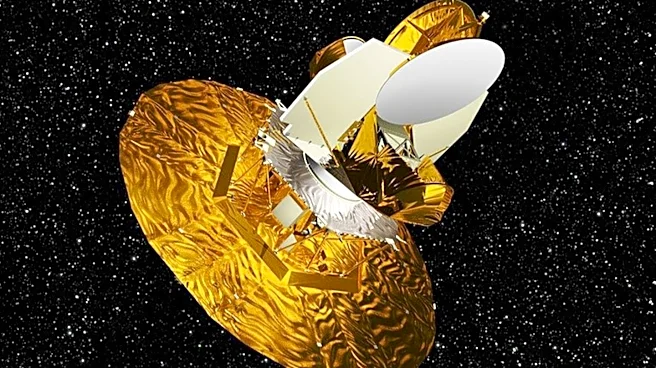
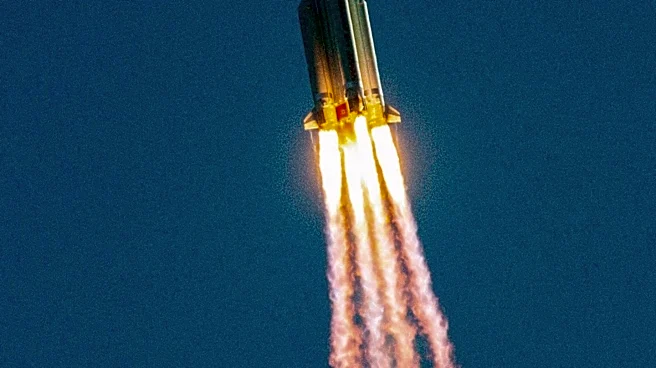
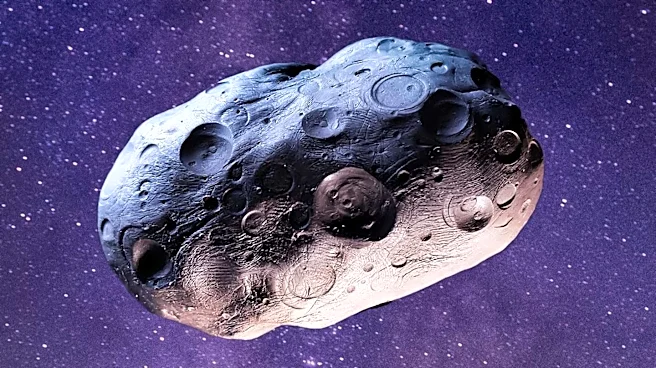
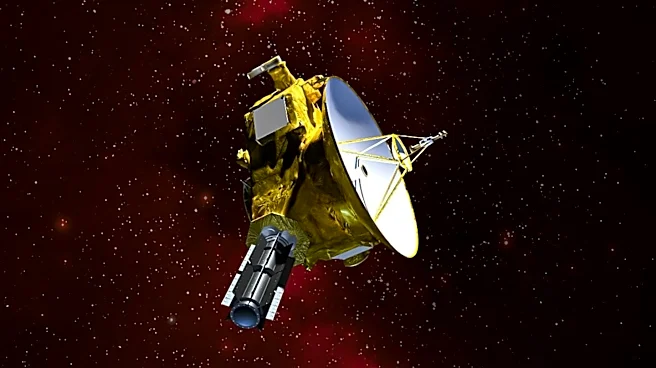
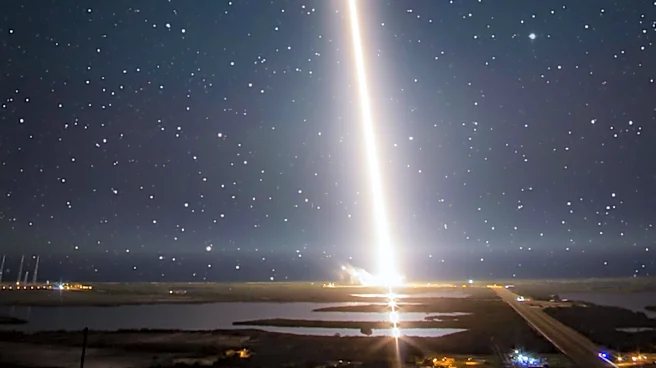
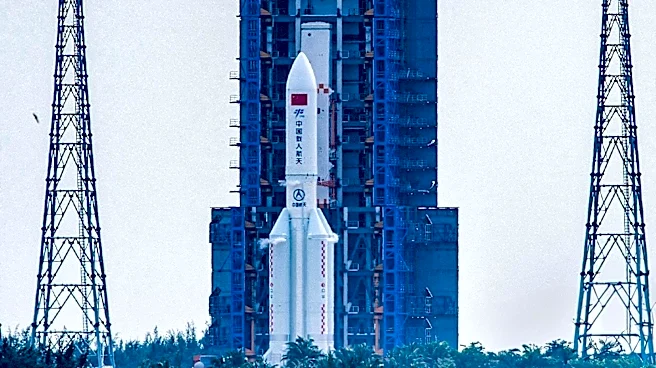
China's Tianwen-2 spacecraft has approached within 12.5 miles of the asteroid Kamo'oalewa, marking a significant milestone in space exploration. Launched in May 2025, the spacecraft has traveled 620 million miles to reach the asteroid, which is one of Earth's
seven known quasi-moons. The mission aims to study the asteroid's composition and structure, with plans to collect surface samples using innovative techniques like 'anchor-and-attach' and 'touch-and-go.' This mission positions China as a leading player in space exploration, potentially becoming the third country to retrieve samples from an asteroid.
Why It's Important?
The Tianwen-2 mission underscores China's growing capabilities and ambitions in space exploration. Successfully collecting samples from Kamo'oalewa would enhance scientific understanding of these celestial bodies and contribute to global knowledge of the solar system. The mission also demonstrates China's technological advancements and strategic investments in space, challenging other space-faring nations to accelerate their own programs. The data collected could have implications for future space missions, including potential resource utilization and planetary defense strategies.
What's Next?
The Tianwen-2 spacecraft will continue to study Kamo'oalewa over the coming months, with sample collection expected to be a complex and delicate operation due to the asteroid's small size and rapid rotation. The mission's success could pave the way for future Chinese space endeavors, including more ambitious missions to other celestial bodies. Internationally, the mission may prompt increased collaboration or competition in space exploration, as countries seek to expand their presence and capabilities in space.