



What's Happening?
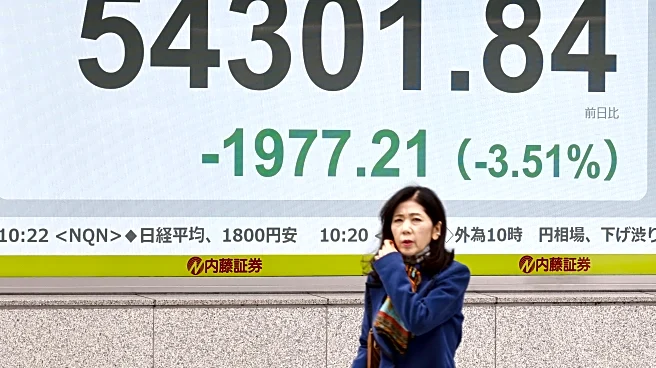
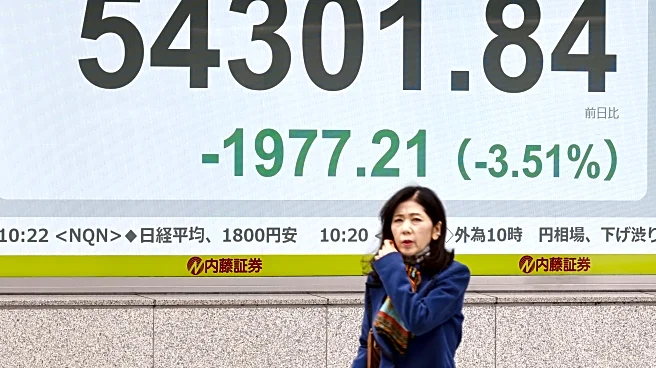
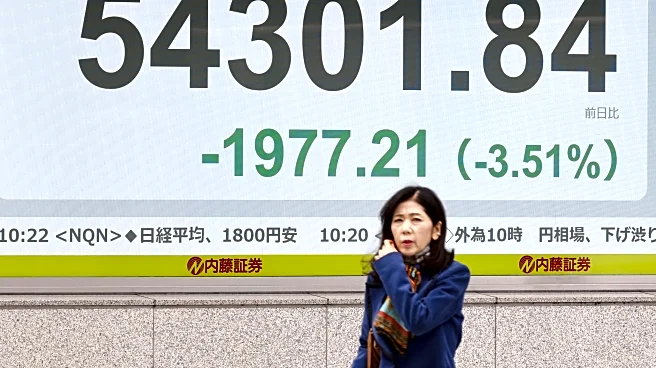
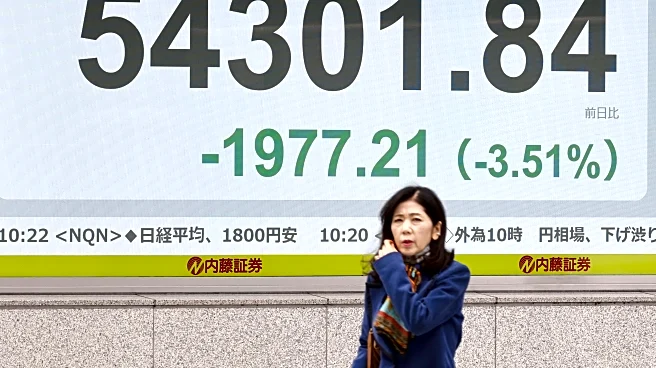
South Korea's stock market, particularly the Kospi index, has experienced significant volatility, with a record single-day drop of 12% followed by a 10% rebound. This fluctuation is attributed to the market's heavy concentration in a few major technology
stocks, such as SK Hynix and Samsung Electronics, which dominate the index. The volatility is further exacerbated by global economic uncertainties, including rising oil prices due to geopolitical tensions in the Middle East. Analysts suggest that the market's sensitivity to energy shocks and its reliance on a few key stocks make it particularly vulnerable to sharp swings.
Why It's Important?
The volatility in South Korea's stock market highlights the risks associated with market concentration in a few dominant companies. This situation underscores the potential for significant market swings, which can impact global investors and influence international market trends. The semiconductor sector's performance is crucial, as it affects not only South Korea's economy but also global supply chains, given the country's role as a major chip producer. The ongoing demand-supply dynamics in the memory chip space are likely to remain tight, influencing global technology markets and potentially affecting U.S. tech companies reliant on these components.
What's Next?
Market analysts predict continued volatility in South Korea's stock market, driven by both domestic factors and international geopolitical developments. The semiconductor sector's performance will be closely monitored, as it plays a pivotal role in the market's stability. Investors may need to brace for further fluctuations, especially if geopolitical tensions escalate or if there are significant shifts in global energy prices. The market's future trajectory will depend on how these factors evolve and how investors respond to ongoing uncertainties.