







What's Happening?
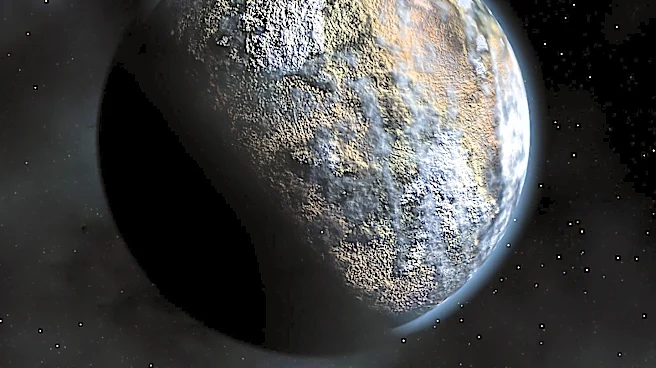
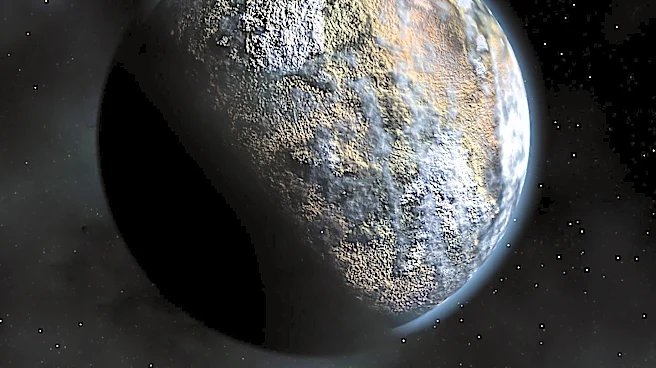
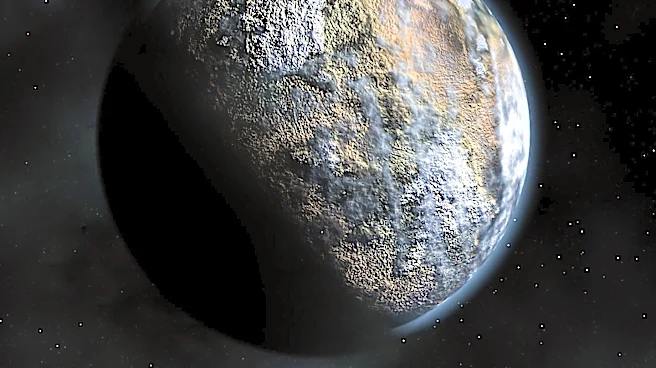
Astronomers have discovered an atmosphere around LHS 1140 b, a rocky exoplanet located 48 light-years from Earth, marking the first time an atmosphere has been detected on a rocky planet in the habitable zone of another star. This discovery was made using
the WINERED spectrograph on the Magellan Clay Telescope in Chile, which detected helium gas leaking into space from the planet. LHS 1140 b, classified as a super-Earth, is about 5.6 times the mass of Earth and orbits a small, cool red dwarf star. The planet receives less than half the sunlight Earth does, resulting in an estimated surface temperature of minus 53 degrees Fahrenheit. The presence of an atmosphere suggests that LHS 1140 b could potentially harbor life, although the full composition of the atmosphere, including the presence of oxygen or water vapor, remains unknown.
Why It's Important?
The detection of an atmosphere on LHS 1140 b is significant as it opens new avenues for studying potentially habitable exoplanets. The presence of an atmosphere is a crucial factor for life as it can protect the planet's surface from harmful radiation and help maintain stable temperatures. This discovery suggests that rocky planets around red dwarf stars, which are common in the galaxy, might retain their atmospheres longer than previously thought, increasing the chances of finding life. The findings could guide future missions aimed at characterizing exoplanet atmospheres and searching for biosignatures, potentially accelerating the timeline for discovering life beyond Earth.
What's Next?
Future observations will focus on determining the full composition of LHS 1140 b's atmosphere to assess its habitability. Researchers aim to identify whether the planet has water vapor, carbon dioxide, or other gases that could support life. The study also sets the stage for upcoming missions, such as the Habitable Worlds Observatory, which will search for biosignatures on rocky planets. Continued research on LHS 1140 b and similar exoplanets could provide insights into the conditions necessary for life and help refine the search for habitable worlds.