








What's Happening?
Guyana has emerged as a significant player in the global oil industry, transitioning from a frontier exploration site to a major source of oil supply. This transformation began with a major discovery in the Stabroek Block in 2015, leading to the identification
of billions of barrels of oil across multiple fields. The rapid development of these resources has been spearheaded by a consortium led by ExxonMobil, with partners Hess Corporation and CNOOC. Production has surged from zero to over 600,000 barrels per day, with expectations to exceed 1 million barrels per day in the coming years. The consortium has effectively managed costs and scaled infrastructure, deploying floating production, storage, and offloading vessels in phases to support structured growth.
Why It's Important?
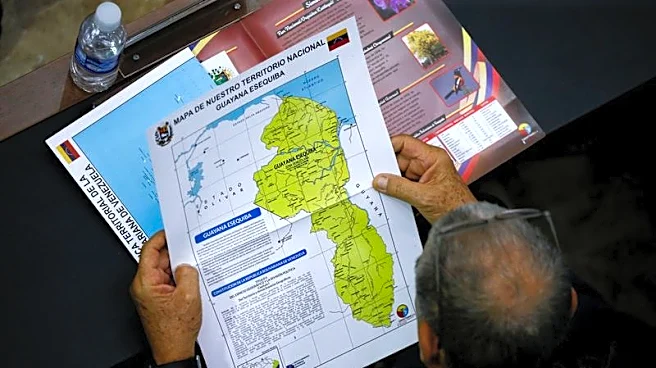
Guyana's rise as an oil producer is reshaping regional and global energy dynamics. The country's ability to attract over $50 billion in investment highlights its appeal as a stable and lucrative oil frontier. This development is crucial as global markets face challenges in bringing new oil supplies online. Guyana's success story offers a model for how geology, capital, and execution can align to rapidly develop oil resources. However, the influx of oil revenue presents challenges for Guyana, including managing fiscal terms, local content, and economic diversification. Additionally, geopolitical tensions, particularly with neighboring Venezuela, add complexity to its investment environment.
What's Next?
As Guyana continues to expand its oil production, the country will need to address the challenges of managing its newfound wealth. This includes building institutional capacity, infrastructure, and regulatory frameworks to ensure sustainable growth. The geopolitical landscape will also require careful navigation, especially concerning territorial disputes with Venezuela. The continued involvement of major oil companies and the potential for further discoveries in the region suggest that Guyana will remain a focal point in the global energy sector. The country's ability to balance rapid development with long-term economic planning will be critical to its future success.