



What's Happening?
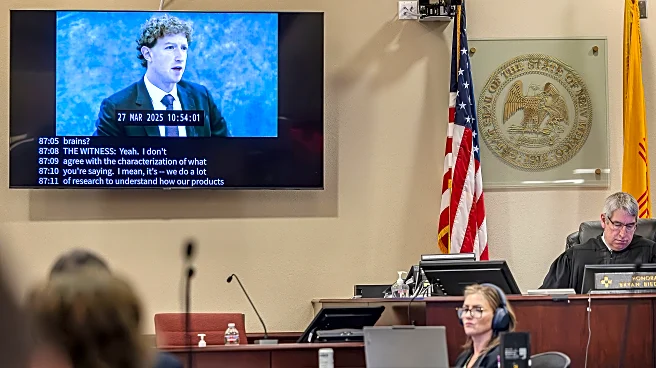
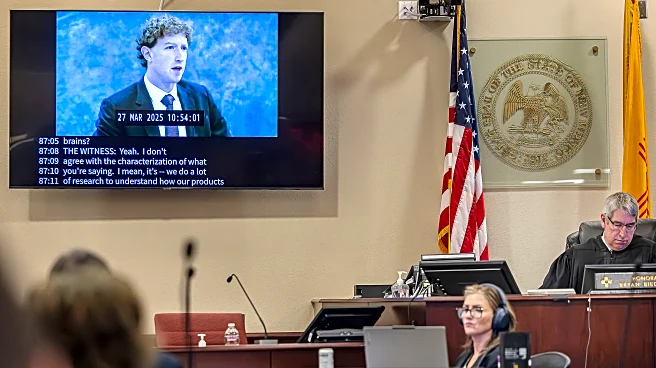
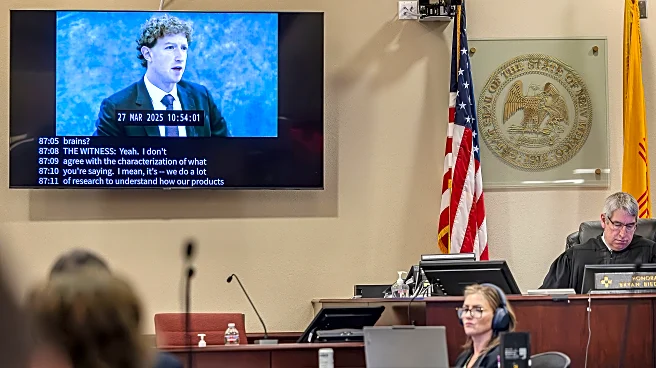
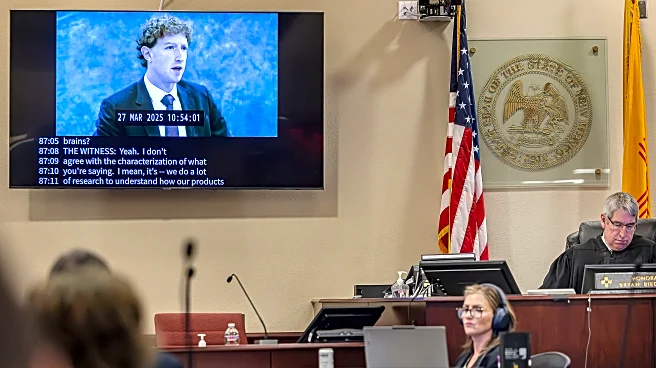
A jury in New Mexico has ordered Meta, the parent company of Facebook and Instagram, to pay $375 million in penalties for failing to protect minors from predators on its social media platforms. The verdict comes after a swift decision by the New Mexico panel,
which found that Meta violated the state's consumer protection laws. The penalty is based on a maximum fine of $5,000 per violation under New Mexico law. Meta has announced its intention to appeal the decision, stating that it disagrees with the verdict and will continue to defend its record of protecting teens online. The case is part of a broader legal challenge against social media companies, with New Mexico being the first state to hold Meta accountable in court for such issues.
Why It's Important?
This verdict is significant as it sets a precedent for holding social media companies accountable for the safety of minors on their platforms. The decision highlights the growing concern over the impact of social media on children's safety and mental health. It underscores the responsibility of tech companies to implement effective measures to protect young users from harmful content and exploitation. The ruling could encourage other states to pursue similar legal actions, potentially leading to stricter regulations and oversight of social media platforms. This case also reflects the increasing scrutiny of big tech companies and their practices, which could have broader implications for the industry.
What's Next?
Following the verdict, New Mexico Attorney General Raúl Torrez has indicated plans to seek additional financial penalties and court-mandated changes to Meta's platforms to enhance protections for children. The case may inspire other states to take legal action against social media companies, potentially leading to a wave of lawsuits and regulatory changes. Meta's appeal process will likely involve further legal battles, and the outcome could influence how tech companies address safety concerns on their platforms. The ongoing deliberations in a related case in Los Angeles also suggest that this issue will remain a focal point in the legal and public discourse surrounding social media.