




What's Happening?
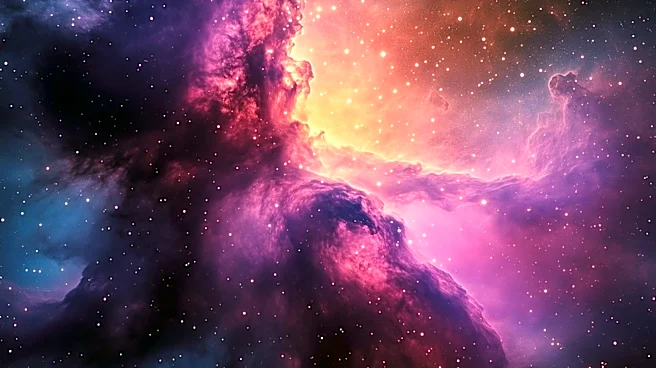
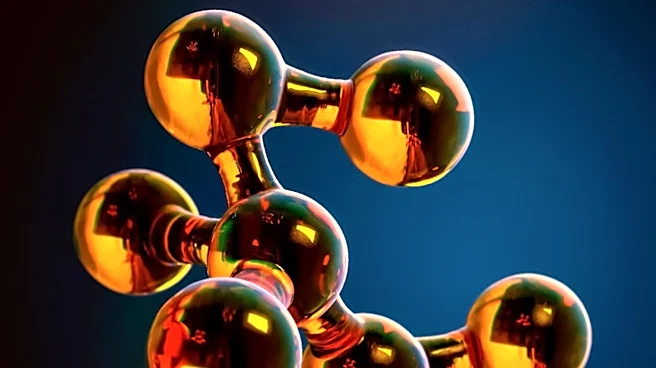
Astronomers have discovered traces of erythrulose, a type of sugar found in fruits like raspberries and kiwis, in a giant gas cloud near the center of the Milky Way. This marks the first time sugar, a key ingredient for life, has been detected in interstellar
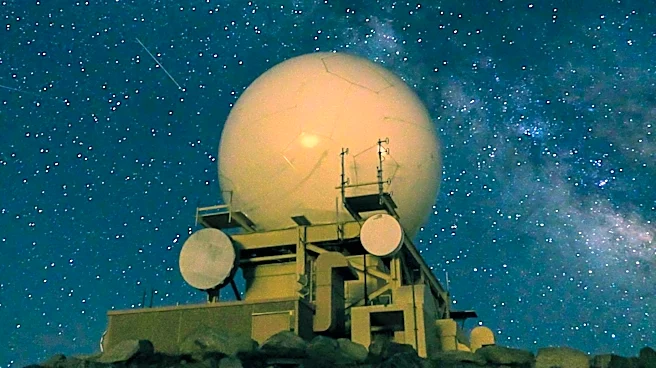
space. The discovery was made using two radio telescopes in Spain, which allowed researchers to focus on a molecular cloud in the galaxy's dense regions. The presence of erythrulose, a four-carbon sugar, challenges the previous belief that sugars form by adding one carbon atom at a time. Instead, it suggests a formation process involving two organic molecules containing a carbon pair. This finding, published in Nature Astronomy, opens up the possibility that sugars are more common in space than previously thought, potentially contributing to the development of life on other planets.
Why It's Important?
The detection of sugar in interstellar space is significant for astrobiology, as sugars like ribose and deoxyribose are essential components of RNA and DNA. The presence of erythrulose, which can form ribonucleotides, suggests that similar processes could occur on other planets, potentially leading to the development of life. This discovery challenges existing theories about sugar formation in space and highlights the role of molecular clouds as 'chemical factories' that can produce complex organic molecules. The finding also supports the idea that organic compounds, including sugars, may have been delivered to Earth via space rocks, contributing to the primordial conditions necessary for life.
What's Next?
Further research is needed to understand the formation processes of sugars in space and their potential role in the development of life. Scientists may continue to explore other molecular clouds and regions of the galaxy to identify additional organic compounds. This could lead to a better understanding of the chemical processes that occur in space and their implications for astrobiology. Additionally, the methods used in this study, such as recreating sugar's light signature in space, could be applied to search for other complex molecules, providing further insights into the building blocks of life beyond Earth.
Beyond the Headlines
The discovery of sugar in space raises questions about the origins of life and the potential for similar processes to occur elsewhere in the universe. It suggests that the building blocks of life may be more widespread than previously thought, challenging our understanding of life's uniqueness on Earth. This finding could influence future space exploration missions, as scientists seek to identify planets with similar conditions that could support life. The ethical and philosophical implications of discovering life beyond Earth could also prompt discussions about humanity's place in the universe and our responsibility to protect and preserve life in all its forms.