






What's Happening?
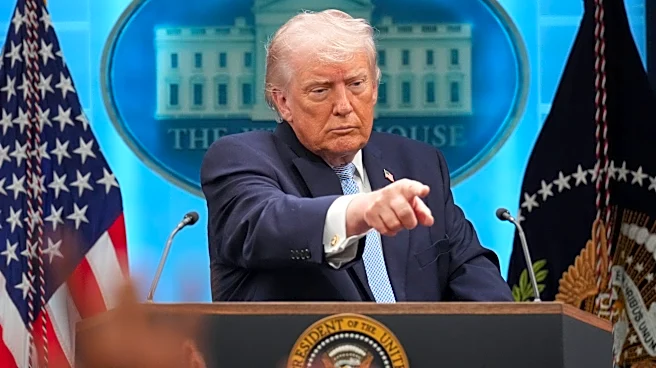
President Trump's recent threats against Iran regarding the reopening of the Strait of Hormuz have raised concerns about potential backlash. The Free Press' Eli Lake explains that these threats could exacerbate tensions as Iran deals with the ongoing
conflict. The situation remains volatile, with the potential for further escalation if diplomatic solutions are not reached. The threats are part of a broader strategy to pressure Iran into compliance, but they also risk provoking a strong response from the Iranian government.
Why It's Important?
The threats from President Trump could have significant implications for U.S.-Iran relations and regional stability. If Iran perceives the threats as aggressive, it may retaliate, leading to increased military confrontations and further destabilization of the Middle East. The situation underscores the delicate balance of power in the region and the challenges of using threats as a diplomatic tool. The potential for conflict could impact global oil markets, international alliances, and the broader geopolitical landscape. The U.S. must carefully navigate this situation to avoid unintended consequences and maintain international credibility.
What's Next?
The U.S. and Iran may engage in backchannel communications to de-escalate tensions and explore diplomatic solutions. International actors, such as the United Nations and regional powers, may also play a role in mediating the conflict and encouraging dialogue. The outcome of these efforts will be crucial in determining the future of U.S.-Iran relations and the stability of the Middle East. The situation remains fluid, and the international community will be closely watching for any developments that could signal a shift towards peace or further conflict.