



What's Happening?
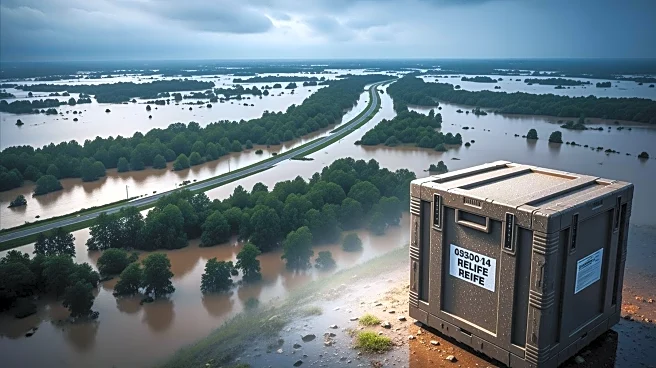
Portugal is facing a severe flooding crisis as several of its main rivers, including the Douro, Tejo, and Sado, have reached critical levels, causing widespread damage and power outages. The government, led by Prime Minister Luís Montenegro, has approved
a €2.5 billion ($2.9 billion) aid package to expedite reconstruction efforts. This decision comes as the country grapples with the aftermath of Storm Kristin and the impending threats of Storm Leonardo and Storm Marta. The flooding has already resulted in at least 11 fatalities and left approximately 1 million people without power. The situation is exacerbated by the damage from last summer's wildfires, which have increased runoff during heavy rains. The government has extended the calamity declaration to facilitate emergency spending and response efforts.
Why It's Important?
The flooding crisis in Portugal highlights the increasing economic and infrastructural challenges posed by extreme weather events. The government's swift response with a substantial aid package underscores the urgency of addressing immediate humanitarian needs while also considering long-term economic impacts. The situation puts pressure on Portugal's fiscal policies, as the country is operating with limited fiscal headroom and aims to maintain a small budget surplus. The aid package is crucial for supporting affected households, businesses, and public infrastructure, but it also raises questions about the sustainability of such emergency interventions in the face of recurring natural disasters.
What's Next?
Portugal's government will continue to monitor the situation closely as Storm Leonardo and Storm Marta approach, potentially exacerbating the flooding crisis. The extended calamity declaration allows for expedited emergency measures, but the government will need to balance immediate relief efforts with long-term infrastructure improvements to mitigate future risks. The international community and environmental organizations may also increase pressure on Portugal to adopt more robust climate adaptation strategies. Additionally, the economic implications of the aid package will likely be scrutinized as the government seeks to preserve fiscal stability while addressing the urgent needs of its citizens.