




What's Happening?
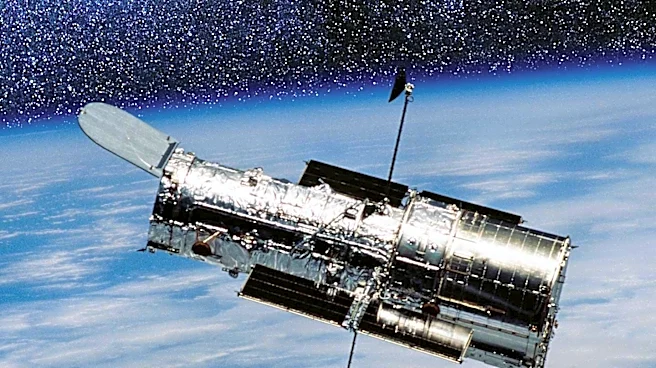
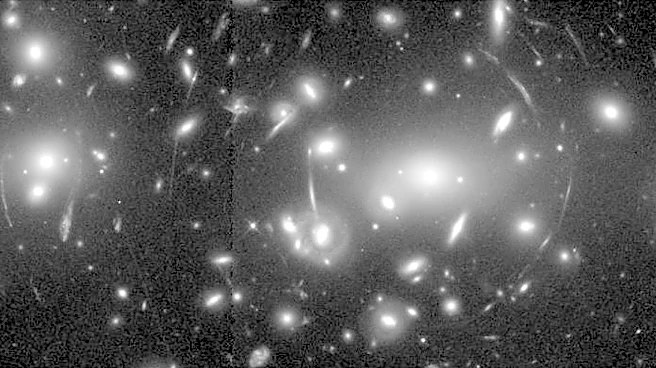
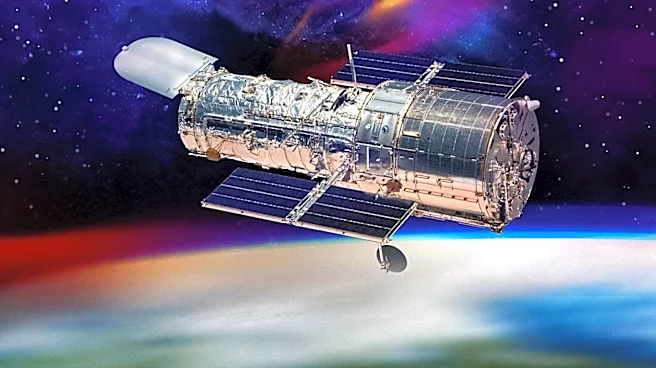
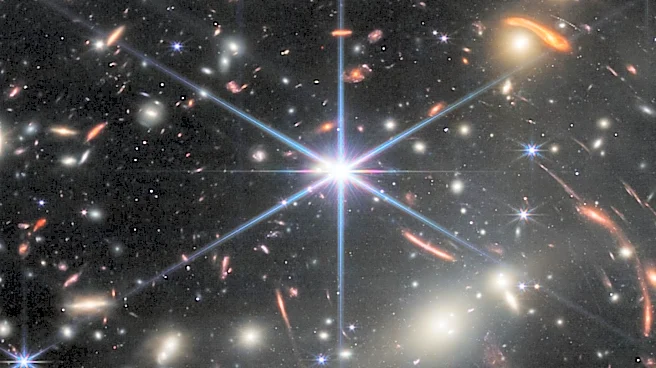
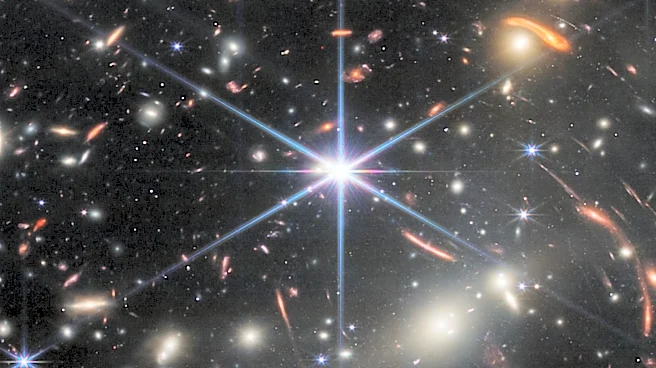
Astronomers have observed a massive galaxy, C26, within the protocluster SPT2349-56, which appears to be losing its star-forming gas. This galaxy, located 1.4 billion years after the Big Bang, is being studied using data from the Hubble Space Telescope
and the James Webb Space Telescope. The galaxy exhibits a comet-like shape with a head, tail, and a bright region known as the 'knot.' The study, led by Dazhi Zhou from the University of British Columbia, suggests that the galaxy is undergoing a process called ram-pressure stripping, where gas is removed as the galaxy moves through a hot, dense medium. This process is causing the galaxy to lose its ability to form new stars, potentially leading to its transformation into a 'red and dead' galaxy.
Why It's Important?
The observation of C26 provides critical insights into the processes that lead to the early cessation of star formation in galaxies. Understanding these processes helps astronomers piece together the history of galaxy evolution and the conditions of the early universe. The findings suggest that ram-pressure stripping, typically associated with mature galaxy clusters, can occur in younger clusters, challenging existing theories about galaxy evolution. This discovery could reshape our understanding of how galaxies evolve and the environmental factors that influence their development. The study also highlights the capabilities of the Hubble and James Webb telescopes in providing detailed observations of distant cosmic phenomena.
What's Next?
Further studies using high-resolution data from the Atacama Large Millimeter/submillimeter Array (ALMA) and the James Webb Space Telescope are planned to explore the interaction between the hot gas in galaxy clusters and the star-forming gas of cluster members. These studies aim to provide more context on the environmental factors affecting galaxy evolution and to confirm the mechanisms behind the observed gas stripping in C26. The research could lead to a deeper understanding of the processes that lead to the quenching of star formation in galaxies and the role of galaxy clusters in shaping the universe.
Beyond the Headlines
The study of C26 and similar galaxies could have broader implications for our understanding of the universe's history. By examining the conditions that lead to the early cessation of star formation, astronomers can gain insights into the factors that influence galaxy morphology and the distribution of galaxies in the universe. This research also underscores the importance of advanced telescopes in uncovering the mysteries of the cosmos and the need for continued investment in space exploration and observation technologies.