

What's Happening?
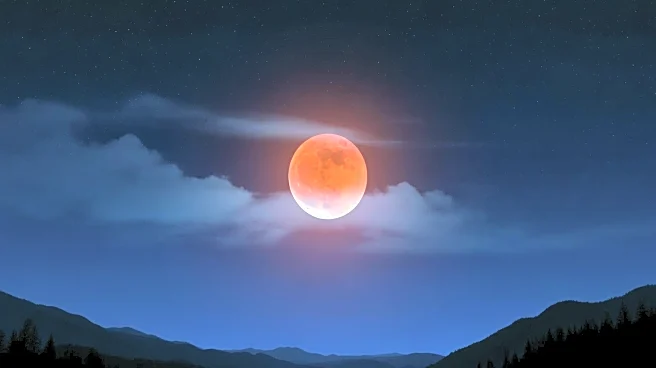
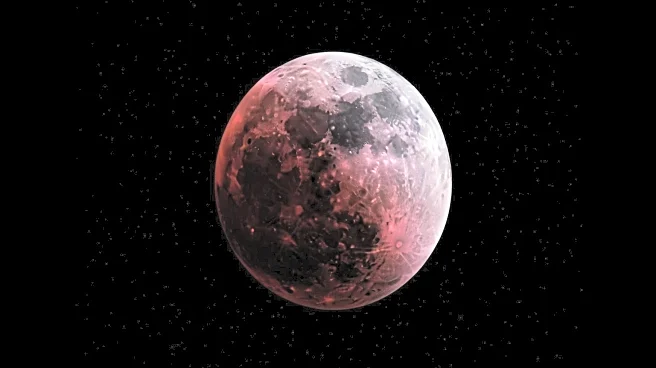
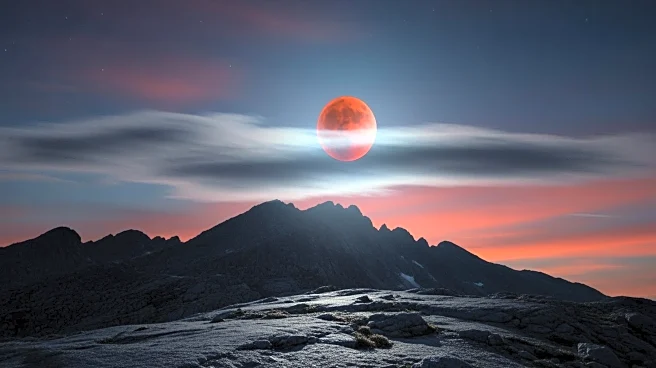
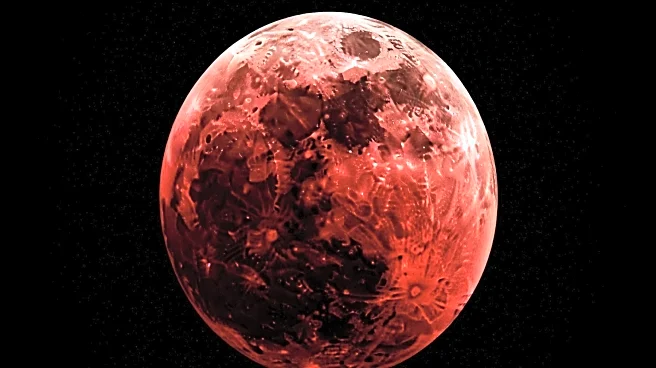
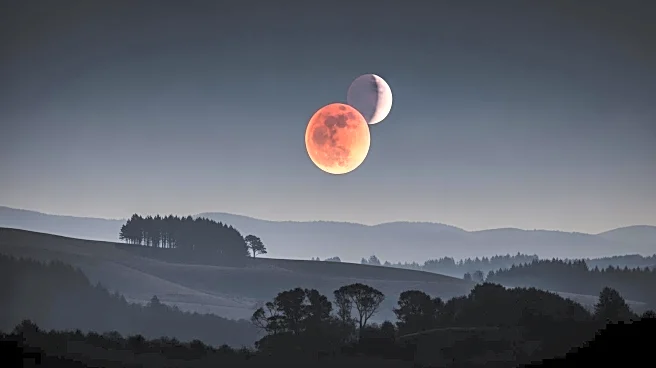
Early risers in Colorado experienced a rare celestial event on the morning of March 3, as a total lunar eclipse turned the moon a striking blood-red color. This event, visible from North America, will not occur again until June 2029. The phenomenon was
captured by Meagan Schrecengost, who, along with her daughter, observed the eclipse from Berthoud, Colorado. According to NASA, the red hue of the moon during an eclipse is due to sunlight passing through Earth's atmosphere, with the presence of dust or clouds intensifying the red appearance. This effect is akin to projecting all the world's sunrises and sunsets onto the moon.
Why It's Important?
The occurrence of a total lunar eclipse is a significant astronomical event that draws attention from both the scientific community and the general public. Such events provide opportunities for education and engagement with astronomy, fostering a greater appreciation for celestial phenomena. The rarity of this event, being the last visible from North America until 2029, adds to its significance, encouraging enthusiasts and casual observers alike to witness and document the spectacle. This event also highlights the role of atmospheric conditions in altering the visual characteristics of celestial bodies, offering insights into atmospheric science.
What's Next?
With the next total lunar eclipse not visible from North America until 2029, astronomers and enthusiasts will likely focus on other upcoming celestial events. Educational institutions and observatories may use this time to prepare for future eclipses, enhancing public outreach and educational programs. Additionally, the documentation and data collected from this eclipse could contribute to ongoing research in atmospheric and astronomical sciences, potentially leading to new discoveries or insights.