

What's Happening?
The President Trump administration is intensifying its financial campaign against Iran, promising an "economic D-Day" with an "unprecedented" level of economic warfare and isolation. This move comes as the U.S. faces diminishing stockpiles of key weapons
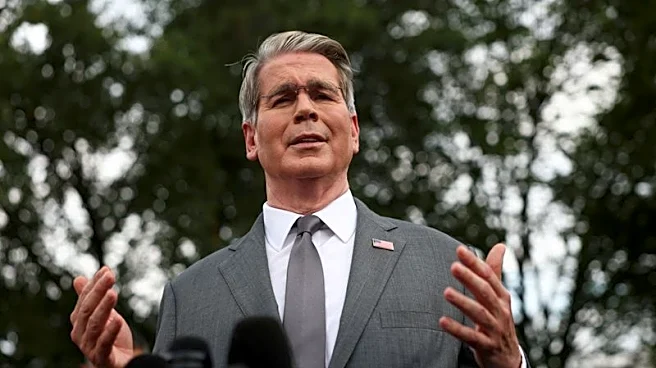
six months into the Iran war and ahead of pivotal midterm elections. The objective is to compel Iran's leadership to cease its nuclear program and fully reopen the Strait of Hormuz to oil and natural gas tankers. Treasury Secretary Scott Bessent indicated that the U.S. would impose secondary sanctions on nations and companies that continue to conduct business with Iran, stating that the U.S. government would use its "full might and force" against them. This strategy, dubbed "Operation Economic Fury," aims to bring Iran to its breaking point, despite the country having endured nearly five decades of U.S. sanctions. Richard Goldberg, who worked on Iran pressure efforts in President Trump's first term, believes the current circumstances, including U.S. strikes on nuclear sites and a naval blockade, create a unique opportunity for capitulation.
Why It's Important?
This escalation of sanctions represents a significant shift in U.S. foreign policy towards Iran, moving beyond previous "maximum pressure" campaigns to a more aggressive economic posture coupled with military action. The threat of secondary sanctions on U.S. allies and trading partners doing business with Iran could strain international relations and force countries like China and India, major buyers of Iranian oil, to choose between economic ties with the U.S. or Iran. This could lead to global economic disruptions, particularly in energy markets, and potentially destabilize international trade relationships. Domestically, the administration's focus on economic warfare could be seen as an attempt to achieve foreign policy objectives without direct military engagement, though the ongoing war complicates this narrative. The success or failure of this strategy will have profound implications for U.S. credibility on the global stage and its ability to leverage economic power to influence geopolitical outcomes.
What's Next?
The immediate next steps will likely involve the U.S. Treasury Department identifying and targeting specific entities and nations for secondary sanctions. This will test the resolve of U.S. allies and trading partners, who will need to decide whether to comply with U.S. demands or risk economic repercussions. Iran's response is expected to be defiant, with officials already dismissing the new sanctions as futile. The situation could lead to increased tensions in the Middle East, particularly around the Strait of Hormuz, as Iran may seek to assert its influence. Analysts suggest that while the U.S. aims to force Iran's capitulation, Iran's historical resilience to sanctions and its distrust of the President Trump administration could harden its position, making a diplomatic resolution more challenging. The outcome will also heavily influence the upcoming midterm elections, as the administration's handling of the Iran conflict will be a key talking point.
Beyond the Headlines
The "economic D-Day" strategy raises deeper questions about the efficacy and ethical implications of using comprehensive economic warfare as a primary tool of foreign policy. While proponents argue it can achieve objectives without direct military conflict, critics highlight the potential for humanitarian crises, economic instability in targeted nations, and the erosion of international legal norms regarding sovereignty and trade. The long-term impact on the Iranian populace, who have already endured decades of sanctions, could be severe, potentially leading to increased social unrest or further entrenching hardline elements within the government. Furthermore, the strategy's reliance on unilateral sanctions could undermine multilateral efforts to address global challenges and foster resentment towards U.S. hegemony. The historical context of Iran's resilience suggests that economic pressure alone may not guarantee the desired political outcomes, potentially leading to prolonged stalemate or unintended consequences.