



What's Happening?
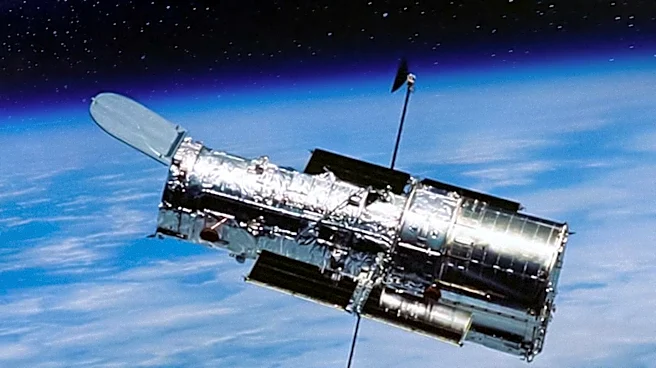
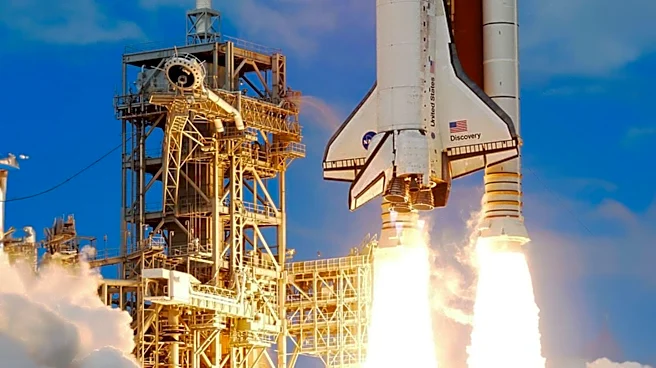
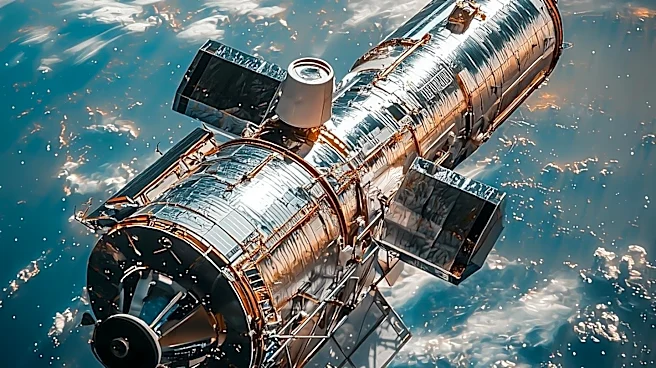
NASA is exploring options for the future of the Hubble Space Telescope (HST), which include a servicing mission or a controlled deorbit. The last servicing mission for Hubble was the STS-125 Space Shuttle flight in May 2009, which was expected to extend
its operational life by five years. Despite this, the HST continues to deliver scientific data almost 17 years later. However, the observatory is nearing the end of its operational life, with NASA estimating a 10 percent chance of uncontrolled atmospheric reentry by September 2032, increasing to 50 percent by December 2033. This risk is exacerbated by increased solar activity, which can lead to greater atmospheric drag. As Hubble lacks a propulsion system, any reentry without intervention would be uncontrolled, posing a remote risk of debris impacting populated areas. NASA has issued a request for information from commercial space organizations to assess potential solutions.
Why It's Important?
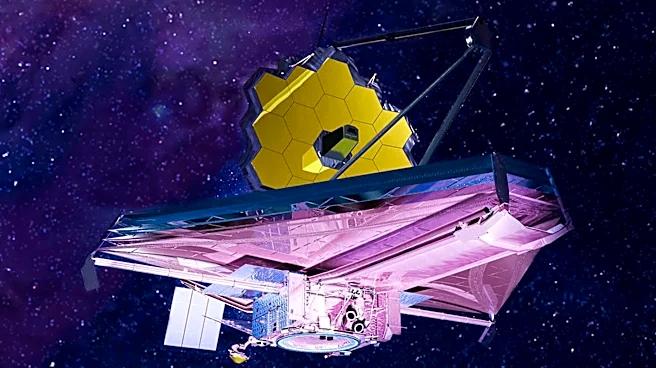
The decision regarding Hubble's future is critical due to its continued scientific value and the absence of a direct replacement before the 2040s, when the Habitable Worlds Observatory (HWO) is projected to become operational. Despite the existence of the James Webb Space Telescope (JWST) and the Nancy Roman Space Telescope, Hubble remains in high demand, with NASA reporting a 7:1 oversubscription for its observation time. An uncontrolled reentry of such a massive object could pose a significant, albeit remote, risk to human life and property on Earth. A successful servicing mission could extend Hubble's operational life, allowing for continued groundbreaking astronomical research, while a controlled deorbit would mitigate the risks associated with an uncontrolled fall, ensuring a safe disposal of the valuable asset.
What's Next?
NASA is currently seeking information and comments from commercial space organizations regarding potential servicing or deorbiting solutions for the Hubble Space Telescope. While this is not yet a request for proposals, it indicates NASA's active exploration of options. The agency's requirement is for any mission to occur by 2032 and to not harm Hubble. Potential options include boosting the telescope's orbit to at least 600 km, enhancing its ongoing performance and increasing its resilience, or grappling the observatory for a controlled reentry and disposal. The soft-capture mechanism fitted during the STS-125 mission will facilitate docking. The timeline for intervention is considered immutable, as an uncontrolled reentry is inevitable without action.
Beyond the Headlines
The situation with the Hubble Space Telescope highlights broader challenges in space asset management and the long-term sustainability of scientific missions. The potential for an uncontrolled reentry underscores the growing issue of space debris and the need for responsible end-of-life planning for large satellites. The consideration of commercial space organizations for servicing missions also reflects a shift towards greater private sector involvement in space operations, potentially opening new avenues for maintaining and extending the life of valuable space infrastructure. The debate over extending Hubble's life versus a controlled deorbit also touches upon the balance between maximizing scientific return and ensuring public safety, as well as the financial and technological hurdles involved in such complex space endeavors.