






What's Happening?
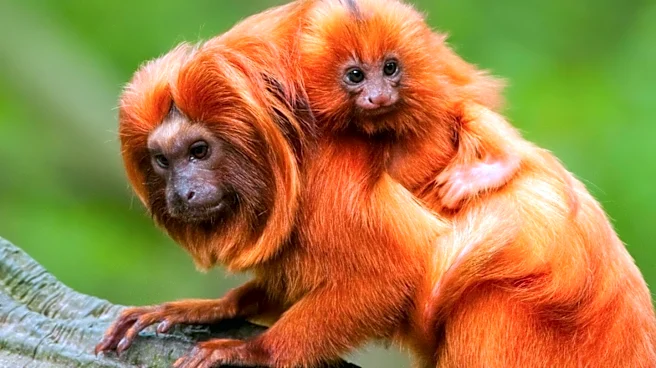
Researchers have identified priority zones for vaccinating golden lion tamarins against yellow fever in Brazil's Atlantic Forest. A recent study found that environmental factors such as habitat connectivity and human population density were linked to higher
mortality rates during a yellow fever outbreak between 2017 and 2019, which killed about 30% of the tamarin population. The study aims to guide vaccination efforts to protect these endangered monkeys from future outbreaks. The golden lion tamarin population has rebounded to approximately 4,800 individuals, but they remain vulnerable to disease due to their limited habitat.
Why It's Important?
The identification of priority zones for vaccination is crucial for the conservation of golden lion tamarins, an endangered species with a limited population. By targeting high-risk areas, conservationists can more effectively protect the tamarins from future yellow fever outbreaks, which pose a significant threat to their survival. The study also highlights the importance of integrating disease ecology into conservation planning, as habitat connectivity, while beneficial for genetic diversity, can also facilitate disease transmission. This research underscores the need for comprehensive conservation strategies that address both habitat preservation and disease management.
What's Next?
Conservationists plan to continue vaccinating golden lion tamarins in identified high-risk areas to prevent future yellow fever outbreaks. The ongoing vaccination campaign aims to maintain a percentage of the population protected, reducing the risk of a catastrophic outbreak. Researchers and conservation organizations will likely continue to monitor environmental factors and disease transmission patterns to refine vaccination strategies. Additionally, efforts to restore and connect fragmented habitats will be balanced with disease monitoring to ensure the long-term survival of the species.