








What's Happening?
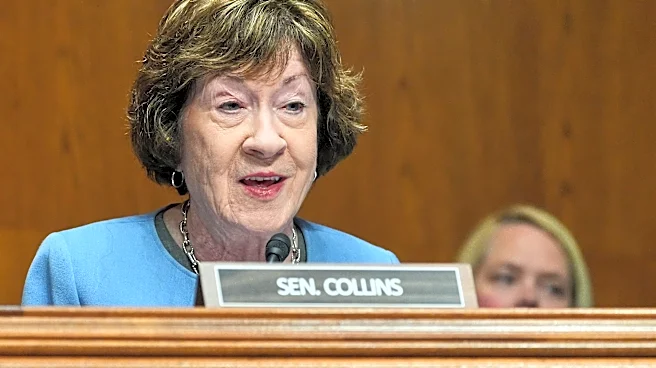
Maine Senator Susan Collins' 2018 vote to confirm Brett Kavanaugh to the U.S. Supreme Court is a central issue in her current re-election campaign. Kavanaugh later joined the conservative majority that overturned Roe v. Wade in 2022, a decision that has
angered many voters, including some who previously supported Collins. Despite calling herself a 'pro-choice' Republican and co-sponsoring legislation for federal abortion protections, Collins has stated she does not regret her vote for Kavanaugh. Her Democratic challenger, Troy Jackson, is actively campaigning on this issue, highlighting Collins' role in Kavanaugh's confirmation and securing endorsements from abortion rights groups like Planned Parenthood and Reproductive Freedom for All. However, a New York Times/Siena poll indicates that abortion is not the top issue for most Maine voters, who are more concerned with the economy.
Why It's Important?
Senator Collins' re-election campaign serves as a significant test case for how the Supreme Court's overturning of Roe v. Wade impacts electoral politics, particularly for moderate Republicans. Her vote for Kavanaugh, despite her stated pro-choice stance, has created a perceived betrayal among some voters, potentially shifting allegiances in a crucial Senate race. This situation highlights the complexities of political identity and voter expectations, especially when a lawmaker's actions on a high-profile judicial nomination conflict with their broader policy positions. The outcome in Maine could offer insights into the long-term electoral consequences of the abortion rights decision and whether it can mobilize voters sufficiently to overcome other economic concerns. It also underscores the strategic importance of judicial appointments in shaping the political landscape.
What's Next?
As the election approaches, both Senator Collins and Troy Jackson will continue to emphasize their respective positions on abortion rights and other key issues. Jackson will likely maintain his focus on Collins' Kavanaugh vote, aiming to galvanize pro-choice voters. Collins, in turn, may highlight her broader record as a moderate and her efforts to protect abortion access through legislation, while also addressing economic concerns. The campaign will likely see continued spending from advocacy groups on both sides. The ultimate impact of the abortion issue on voter turnout and preferences in Maine will be closely watched, especially given the polling data suggesting other issues, like the economy, are more salient for many voters. The election's result will provide a clearer picture of how the post-Roe political environment is shaping electoral outcomes in states with varying political leanings.
Beyond the Headlines
The Maine Senate race transcends a typical political contest, delving into the evolving nature of political moderation and the power of judicial decisions to reshape electoral dynamics. Senator Collins' predicament reflects a broader challenge for politicians who attempt to occupy a middle ground on deeply divisive issues. The narrative of 'betrayal' by some voters underscores the emotional and personal impact of the Supreme Court's ruling, highlighting how judicial appointments can have profound and lasting effects on individual liberties and political trust. This election also raises questions about the effectiveness of single-issue voting versus a more holistic assessment of a candidate's record. The outcome could influence future campaign strategies for candidates navigating complex social issues and the role of judicial appointments in national political discourse.