







What's Happening?
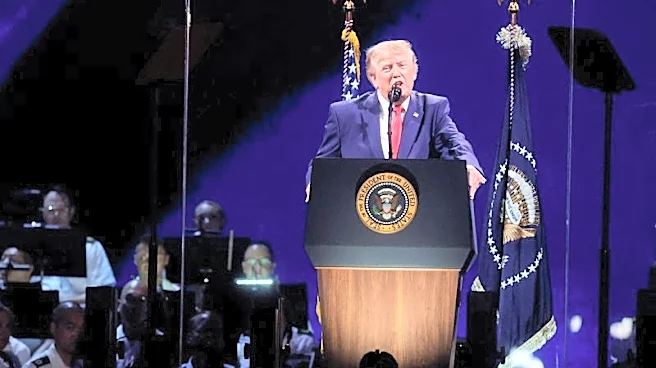
In the summer of 1946, three future U.S. presidents—Bill Clinton, George W. Bush, and President Trump—were born into a nation emerging victorious from World War II. Their presidencies would each reflect different stages of America's evolving global role.
Clinton's tenure in the 1990s was marked by economic prosperity and the promotion of globalization, as the U.S. led a post-Soviet world order. Bush's presidency, however, was defined by the September 11 attacks and the subsequent War on Terror, which shifted the focus from globalization to security and conflict. President Trump's administration further altered the trajectory by emphasizing 'America First' policies, challenging globalization, and focusing on national sovereignty and industrial policy. As these leaders turn 80, their legacies highlight America's journey from a confident global leader to a nation reassessing its international role.
Why It's Important?
The presidencies of Clinton, Bush, and Trump illustrate significant shifts in U.S. foreign policy and economic strategies over the past few decades. Clinton's era of globalization and economic expansion set the stage for America's leadership in a connected world. However, the events of 9/11 under Bush's leadership marked a pivot towards security and military intervention, reshaping global perceptions of U.S. power. President Trump's focus on nationalism and economic protectionism further challenged the established order, reflecting a broader skepticism about globalization and international alliances. These shifts have profound implications for U.S. foreign policy, economic strategies, and its role in global governance, affecting international relations and economic partnerships.