
What's Happening?
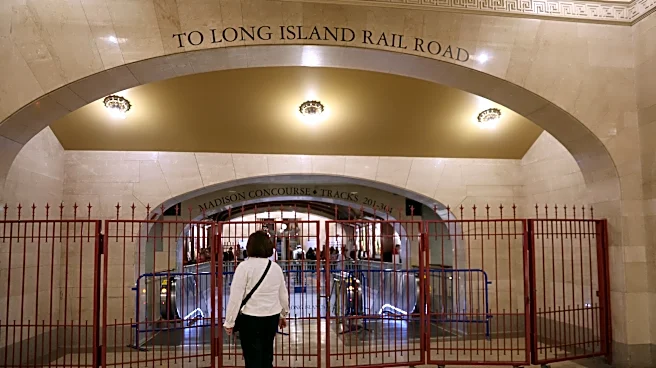
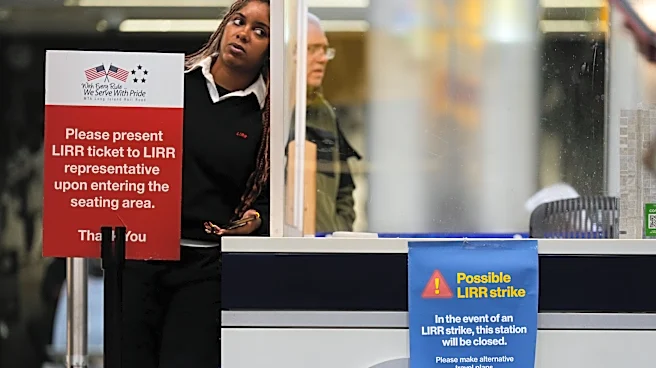
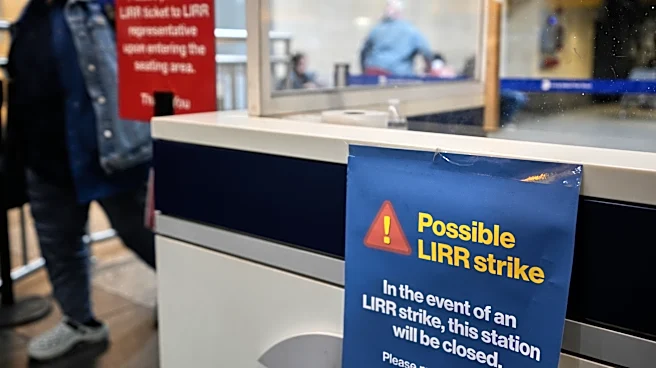
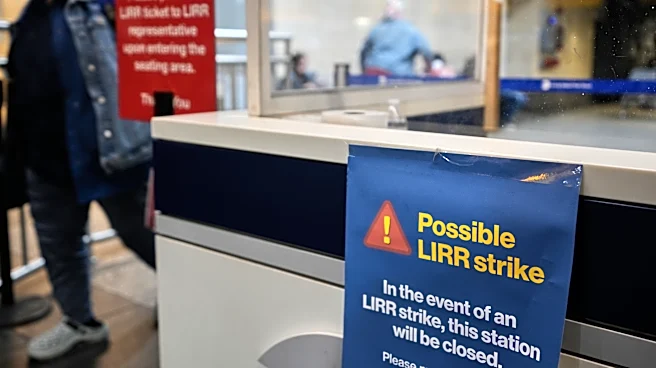
The Long Island Rail Road (LIRR) strike has entered its second day as negotiations between the Metropolitan Transportation Authority (MTA) and the unions remain at an impasse. Governor Kathy Hochul has made
a direct appeal to the LIRR workers, urging them to consider the broader impact of the strike on commuters and the regional economy. Despite her intervention, there appears to be no immediate resolution in sight. The strike has caused significant disruptions for thousands of daily commuters who rely on the LIRR for transportation across Long Island and into New York City. The core issues in the negotiations include wage increases, job security, and working conditions, which the unions argue have not been adequately addressed by the MTA.
Why It's Important?
The ongoing strike has significant implications for the New York metropolitan area, affecting not only daily commuters but also the regional economy. The LIRR is a critical component of the transportation infrastructure, and prolonged disruptions could lead to economic losses for businesses and inconvenience for residents. The standoff highlights broader labor issues within the transportation sector, where workers are increasingly demanding better pay and conditions. The outcome of these negotiations could set a precedent for other labor disputes in the region, potentially influencing future union strategies and employer responses.
What's Next?
If the strike continues, pressure will likely mount on both the MTA and the unions to reach a compromise. Governor Hochul and other state officials may need to intensify their involvement to facilitate a resolution. Commuters and businesses affected by the strike may also increase their calls for a swift end to the disruptions. The unions may consider escalating their actions if their demands are not met, while the MTA might explore alternative measures to mitigate the impact on commuters.