


What's Happening?
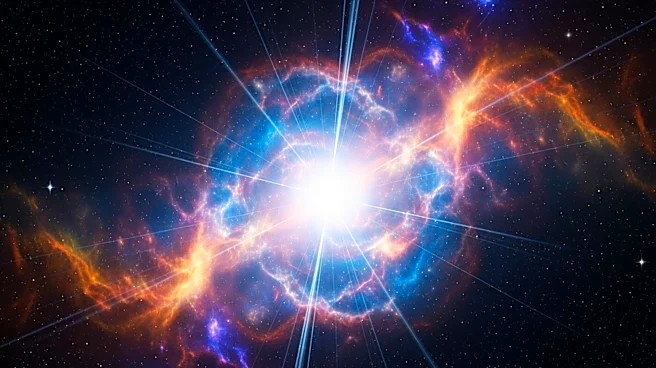
In 2025, astronomers detected an unusually long gamma-ray burst (GRB) that lasted for seven hours, named GRB 250702B. This event was recorded using data from five high-energy telescopes, marking it as the longest-lasting GRB ever observed. Typically,
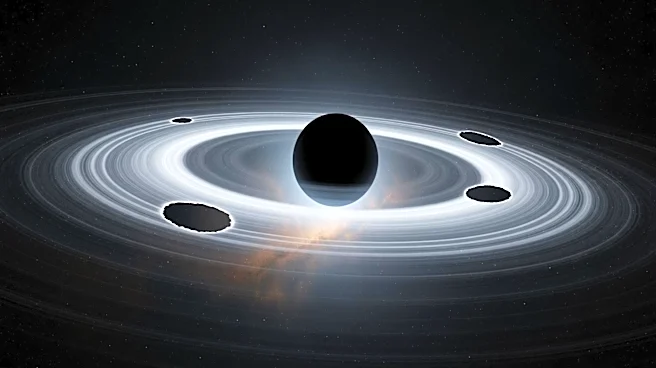
GRBs last only a few minutes, with the previous record being around 15,000 seconds. The discovery of GRB 250702B has prompted scientists to seek novel explanations for its extreme duration, as it cannot be explained by the known origins of GRBs, which usually involve the collapse of massive stars or the merger of neutron stars. Researchers at NASA's Goddard Space Flight Center, including Eliza Neights, are exploring the possibility of a 'helium merger' as the cause, where a black hole consumes a helium star, resulting in a prolonged jet of energy.
Why It's Important?
The discovery of GRB 250702B is significant as it challenges existing theories about the origins of gamma-ray bursts, which are among the most energetic events in the universe. Understanding these phenomena can provide insights into the life cycles of stars and the formation of black holes. The event's unprecedented duration suggests that there may be unknown processes at play in the universe, prompting further research and potentially leading to new discoveries in astrophysics. This could have implications for our understanding of cosmic events and the fundamental forces that govern them, impacting scientific theories and models.
What's Next?
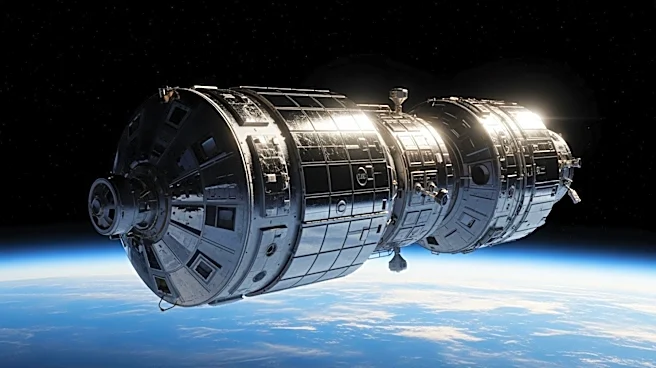
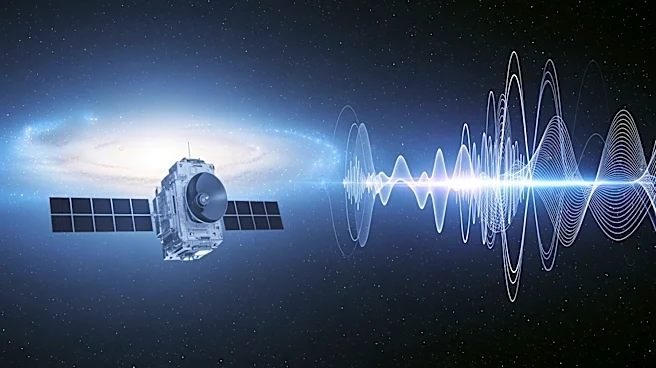
Researchers are preparing for the launch of the Compton Spectrometer and Imager (COSI) telescope in 2027, which will be equipped to detect and analyze gamma-ray bursts with extreme durations. This new technology aims to observe more such events, helping scientists to better understand the physical processes behind them. The findings from COSI could lead to advancements in the field of astrophysics and enhance our comprehension of the universe's most powerful phenomena.