



What's Happening?
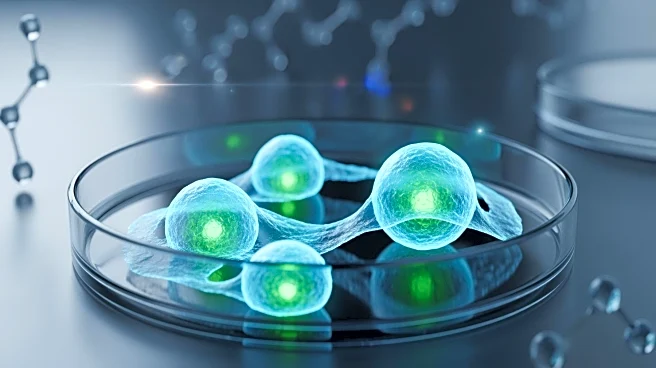
Researchers at the Institute of Process Engineering have developed a biomimetic platform that enhances CAR T cell therapy for relapsed and refractory leukemia. The platform, known as the ferritin aggregation cell engager (FACE), strengthens the interaction
between CAR T cells and leukemia cells, improving the therapy's efficacy. FACE binds to CD71, a protein highly expressed in leukemia cells, creating a bridge that enhances CAR T cell recognition and elimination of cancer cells. This approach addresses the challenge of antigen escape, a common issue in CAR T cell therapy.
Why It's Important?
This development is significant as it offers a novel solution to improve the effectiveness of CAR T cell therapy, particularly for patients with treatment-resistant leukemia. By enhancing the physical and functional interface between CAR T cells and cancer cells, the platform could lead to better treatment outcomes and reduced relapse rates. The approach also avoids the need for additional genetic engineering, making it a potentially more accessible and cost-effective option for patients.
What's Next?
Further research and clinical trials are needed to validate the efficacy and safety of the FACE platform in humans. If successful, this approach could be integrated into existing CAR T cell manufacturing workflows, offering a new tool for oncologists in the fight against leukemia. The researchers are also exploring the potential application of this technology to other types of cancer, which could broaden its impact in the field of oncology.
Beyond the Headlines
The study highlights the importance of innovative approaches to overcoming the limitations of current cancer therapies. It also raises questions about the accessibility and affordability of advanced treatments, particularly for patients in low-resource settings. The ethical implications of using biomimetic platforms in cancer treatment must also be considered as this field continues to evolve.