


What's Happening?
The U.S. Department of Justice (DOJ) has informed a federal court that it is nearing the completion of its review of several million pages of documents related to Jeffrey Epstein. This review is in response to the Epstein Files Transparency Act, which
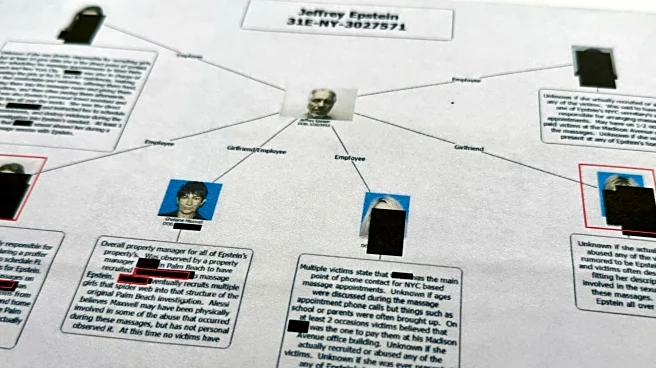
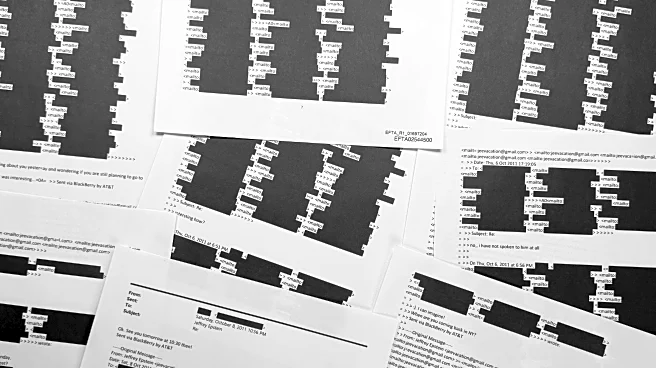
mandates the release of all DOJ files concerning Epstein. The Act, signed into law on November 19, required the DOJ to release these files within 30 days. However, the DOJ has only released a fraction of the documents so far. The department is engaged in a meticulous process to redact sensitive information, including victim identities, while ensuring compliance with the Act. The review involves hundreds of DOJ employees and includes internal communications, investigation documents, and multimedia files. Despite the progress, the DOJ has not provided a specific completion date, citing ongoing quality control and document management processes.
Why It's Important?
The review and release of the Epstein files are significant due to the high-profile nature of the case and the public's demand for transparency. Jeffrey Epstein, a convicted sex offender, died by suicide in 2019 while awaiting trial on federal sex trafficking charges. The case has drawn widespread attention due to Epstein's connections with influential figures and the controversial plea deal he received in Florida. The DOJ's handling of the files is crucial for maintaining public trust and ensuring justice for Epstein's victims. The release of these documents could potentially reveal new information about Epstein's activities and associates, impacting ongoing investigations and public discourse.
What's Next?
The DOJ is expected to continue its review and redaction process, with a focus on protecting victim identities and complying with the Epstein Files Transparency Act. The department's progress will likely be monitored closely by the court and the public. As the review nears completion, there may be increased scrutiny on the DOJ's handling of the case and the information contained within the files. Stakeholders, including victims' advocates and legal experts, may respond to the released documents, potentially leading to further legal actions or policy discussions.