






What's Happening?
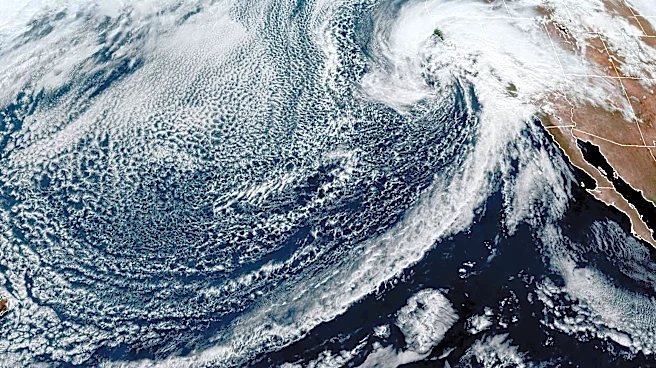
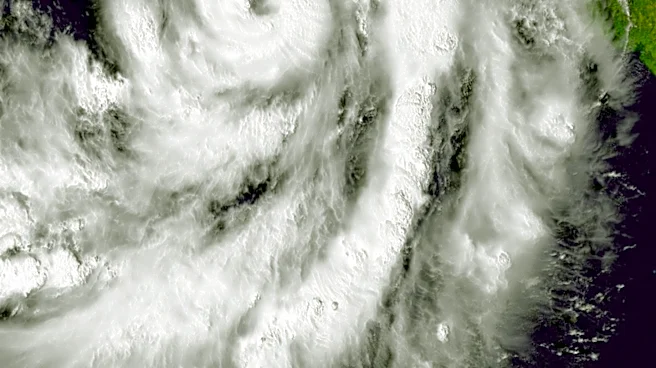
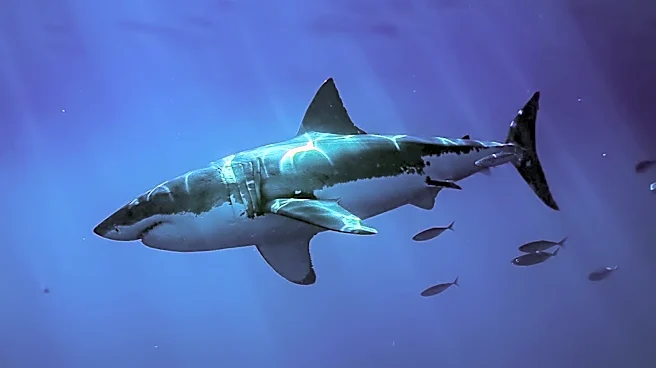
In August 2023, Tropical Storm Hilary struck Southern California, prompting 22 juvenile great white sharks to leave their nursery habitat off San Diego. The storm, which was the first tropical storm to directly affect the region this century, caused a significant
drop in sea-surface temperature and rough coastal conditions. Researchers from UC San Diego's Scripps Institution of Oceanography and the Shark Lab at California State University, Long Beach used acoustic tags to track the sharks' movements. The study found that many sharks temporarily abandoned the area during the storm but returned within days or weeks once conditions improved. The storm's impact on the sharks highlights the vulnerability of their nursery zones to sudden environmental changes.
Why It's Important?
The study provides valuable insights into how marine species, particularly juvenile great white sharks, respond to extreme weather events. As climate change increases the frequency and intensity of such events, understanding these responses is crucial for conservation efforts and coastal management. The findings are particularly relevant for California, where human and shark interactions are common in coastal waters. By understanding shark behavior during storms, scientists and policymakers can make informed decisions to ensure the safety of both marine life and human activities. The resilience shown by the sharks in returning to their nursery suggests a potential for adaptation, but also underscores the need for ongoing monitoring as climate conditions continue to evolve.