






What's Happening?
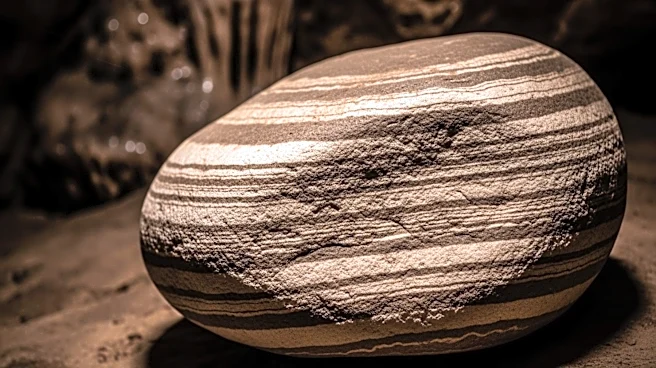
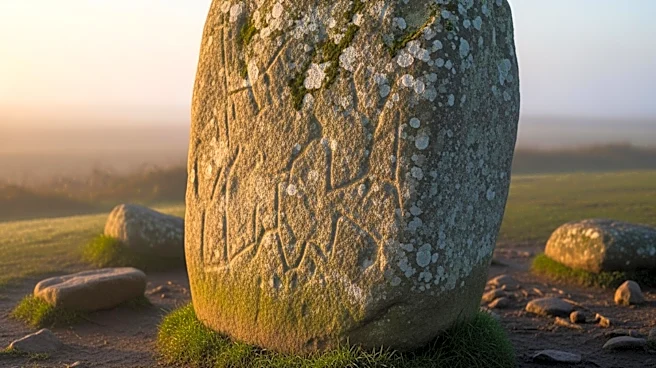
Researchers have been investigating the origins of Stonehenge's altar stone, a 6-tonne sandstone monolith, to determine how it was transported to its current location in southern England. The stone, which has been part of Stonehenge for approximately
4500 years, was found to have originated from north-east Scotland based on its chemical composition. Initially, it was hypothesized that the stone could have been moved by glaciers during the last glacial period, potentially reducing the distance humans would have needed to transport it. However, geological analysis and ice flow modeling suggest that while some ice flows from north-east Scotland did move south, the scenario of a glacier transporting the stone to a location closer to Stonehenge is unlikely. The study concludes that humans likely transported the stone over a distance of 750 kilometers, similar to how other large stones at Stonehenge were moved.
Why It's Important?
The findings highlight the remarkable capabilities and determination of ancient humans in constructing monumental structures like Stonehenge. Understanding the transportation methods used for the altar stone provides insight into the technological and logistical skills of prehistoric societies. This research challenges previous assumptions about the role of natural forces in the construction of ancient monuments and underscores the human effort involved. The study also contributes to the broader understanding of human history and the cultural significance of Stonehenge, which continues to be a subject of fascination and study.
What's Next?
Future research aims to pinpoint the exact quarry or outcrop in north-east Scotland from which the altar stone was sourced. This could provide further insights into the selection process and the reasons behind choosing this specific type of sandstone for Stonehenge. Additionally, researchers hope to uncover more about the motivations and cultural significance behind the transportation and use of such massive stones in ancient monuments. Continued archaeological and geological studies may reveal more about the construction techniques and societal organization of the people who built Stonehenge.
Beyond the Headlines
The study raises questions about the cultural and symbolic reasons behind the selection of specific stones for ancient monuments. It suggests that, much like modern preferences for certain materials in construction and decoration, ancient societies may have had specific aesthetic or symbolic reasons for choosing particular types of stone. This aspect of human behavior reflects a long-standing fascination with materials and their meanings, which continues to influence cultural practices today.