
What's Happening?
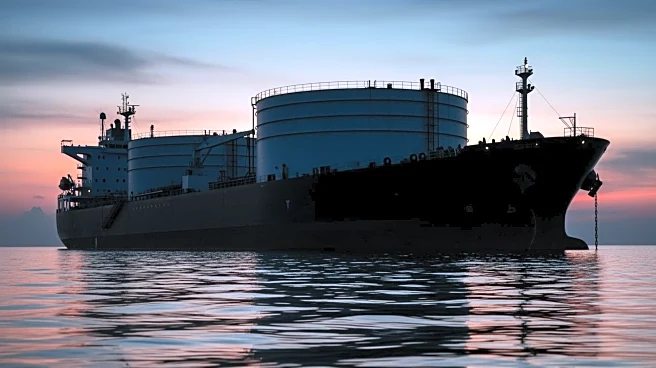
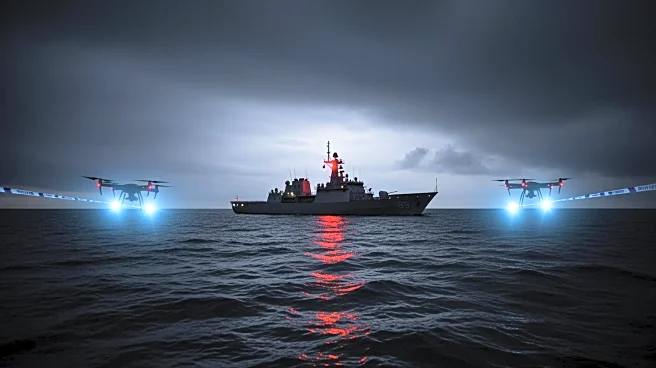
The Islamic Revolutionary Guard Corps (IRGC) of Iran has claimed responsibility for a drone strike on an oil tanker, asserting that the vessel violated Iran's declared closure of the Strait of Hormuz. This incident is part of a series of aggressive actions
by Iran, which has reportedly attacked multiple vessels since announcing the strait's closure over a week ago. The IRGC's actions have resulted in the deaths of at least eight seafarers. Despite the risks, some tankers continue to navigate the strait with their transponders off, driven by high day rates and war risk insurance, which remains costly. The U.S. Maritime Administration has advised ships to avoid the strait, while other bodies recommend thorough risk assessments.
Why It's Important?
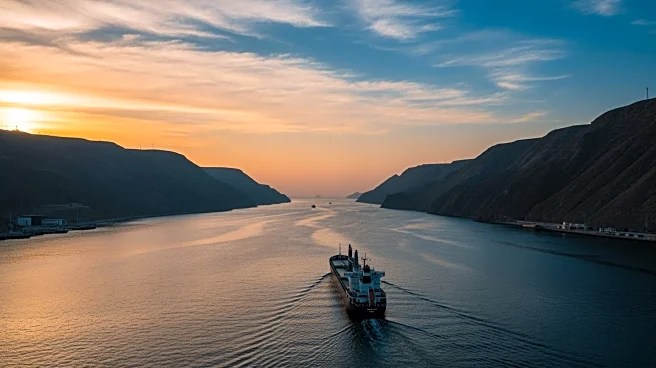
The closure of the Strait of Hormuz by Iran and the subsequent attacks on vessels have significant implications for global oil supply and maritime security. The strait is a critical chokepoint for the world's oil shipments, and disruptions here can lead to increased oil prices and heightened geopolitical tensions. The aggressive stance by Iran could escalate conflicts in the region, affecting international shipping routes and global trade. The situation also poses a direct threat to the safety of maritime crews and the security of international waters, prompting calls for increased naval presence and diplomatic interventions to ensure safe passage.
What's Next?
The international community, particularly countries reliant on oil shipments through the Strait of Hormuz, may seek diplomatic solutions to de-escalate tensions. There could be increased naval patrols by countries like the United States to ensure the security of the strait. Shipping companies might adjust their routes or enhance security measures to protect their vessels and crews. Additionally, there may be calls for international sanctions or negotiations to address Iran's actions and restore safe passage through this vital maritime corridor.