




What's Happening?
Following the November election, there is a renewed bipartisan push in Washington to address critical issues such as the growing threat of wildfire and the declining health of America’s federal forests. Lawmakers from both parties are seeking common ground
to solve these problems, which have been exacerbated by decades of 'no-touch' management leading to overstocked forests. In January 2025, 64 House Democrats joined Republicans in supporting legislation to improve forest management and accelerate restoration work. Recent bipartisan cooperation has also led to legislation, supported by Democratic Rep. Marie Gluesenkamp Perez and Republican Rep. Russ Fulcher, becoming law, expanding opportunities for counties and tribes to manage federal forests and reinvest timber revenues in restoration projects. Oregon Democratic Senator Jeff Merkley and Republican Congressman Cliff Bentz have also introduced legislation to expand opportunities for converting woody material from forest management projects into renewable fuels.
Why It's Important?
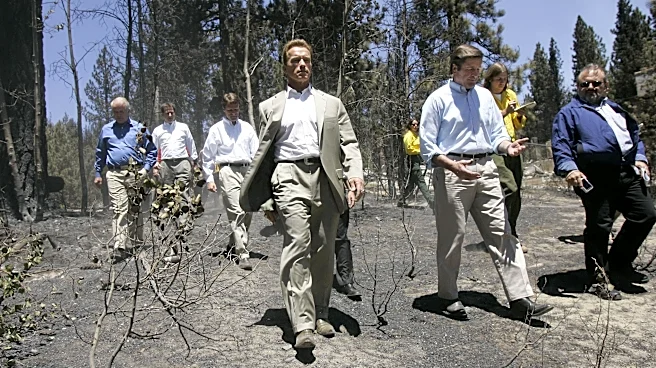
The bipartisan focus on forest management is crucial for the U.S. due to the escalating risks of wildfires, which devastate communities, ecosystems, and economies. Millions of acres of federal forests are vulnerable to wildfire, insects, and disease, posing significant threats to rural communities and natural resources. Strengthening markets for timber and other materials from forest management projects is vital for supporting logging contractors and mills, which provide essential jobs and infrastructure. Without a dependable supply of work, these businesses face closure, leading to job losses and a diminished capacity to manage forests effectively. The legislative efforts to turn woody material into renewable fuels not only address forest health but also contribute to renewable energy goals, offering a dual benefit for environmental and economic sustainability.
What's Next?
Congress is expected to build on existing bipartisan agreements to make meaningful improvements in how public forests are managed. This will likely involve advocating for practical reforms that enable federal agencies to complete projects more efficiently and treat more acres of unhealthy forests. Addressing delays caused by lengthy environmental reviews and litigation will be a key focus to ensure timely restoration and recovery efforts after wildfires. The continued collaboration between lawmakers like Senator Merkley and Congressman Bentz suggests further legislative initiatives aimed at supporting the forestry industry and promoting sustainable forest practices. The goal is to ensure that investments in forest restoration yield tangible results, supporting both ecological health and the economic well-being of communities dependent on healthy forests.
Beyond the Headlines
The bipartisan consensus on forest management reflects a growing recognition that environmental challenges require collaborative solutions that transcend political divides. The shift from 'preservation is not conservation' highlights a more proactive and integrated approach to land management, acknowledging the need for human intervention to maintain ecological balance and prevent catastrophic events. This approach also underscores the economic value of healthy forests, not just for timber, but also for renewable energy and community resilience. The emphasis on supporting local economies through forestry businesses and reinvesting timber revenues in restoration projects demonstrates a holistic view of sustainability. This could set a precedent for how other complex environmental and economic issues are tackled in the U.S., fostering a more cooperative and effective legislative environment.