



What's Happening?
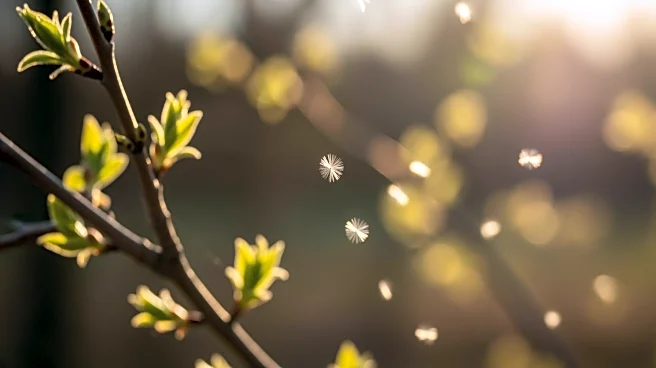
A recent study by Climate Central has highlighted a significant extension in allergy seasons across the United States, with an average increase of about three weeks since the 1970s. This change is attributed to a rise in freeze-free days, allowing plants
more time to bloom and release pollen. The study notes that 173 major U.S. cities have experienced an additional 21 freeze-free days, exacerbating pollen production. The Northwest region, in particular, has seen the most significant increase, with 31 more days of pollen exposure. This trend is linked to warming temperatures and increased carbon dioxide levels, which are expected to lead to a 200% rise in pollen production by the end of the century. The Centers for Disease Control and Prevention (CDC) reports that about one in four adults and one in five children in the U.S. suffer from seasonal allergies.
Why It's Important?
The extension of allergy seasons poses significant health challenges for millions of Americans who suffer from seasonal allergies. The increased pollen production can lead to more severe allergy symptoms, impacting quality of life and potentially increasing healthcare costs. This development also underscores the broader implications of climate change, as rising temperatures and pollution levels contribute to environmental changes that affect public health. The findings highlight the need for individuals to adapt their lifestyles, such as limiting outdoor activities during high pollen periods and using air filtration systems indoors, to mitigate the impact of longer allergy seasons.
What's Next?
As allergy seasons continue to lengthen, individuals and healthcare providers may need to adjust their strategies for managing allergy symptoms. This could involve earlier consultations with allergists and the implementation of preventive measures to reduce exposure to pollen. Additionally, policymakers and environmental agencies might consider addressing the root causes of climate change to mitigate its impact on public health. Continued research and monitoring of allergy trends will be crucial in developing effective responses to these environmental changes.
Beyond the Headlines
The extension of allergy seasons is a tangible example of how climate change can directly affect human health. It raises ethical and policy questions about the responsibility of governments and industries to address environmental issues that have widespread health implications. The situation also highlights the importance of public awareness and education on the effects of climate change, encouraging individuals to take proactive steps in reducing their carbon footprint and advocating for sustainable practices.