



What's Happening?
A new architectural proposal named 'Rotterdam Rocks!' has been unveiled by the Dutch design studio MVRDV. This innovative project is set to transform the skyline of Rotterdam with a unique structure composed of seven massive moss-covered boulders stacked
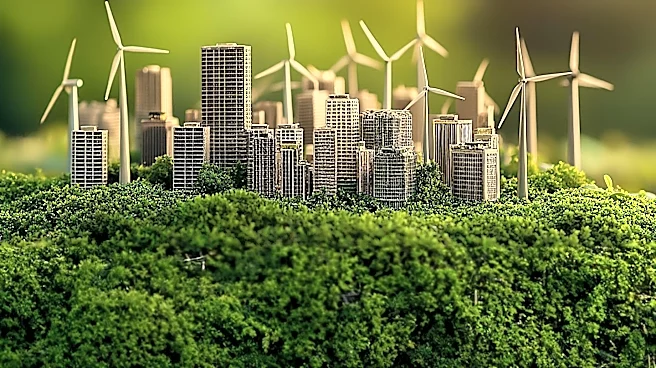
into a tower. The building is designed to support soil, water, plants, and wildlife, effectively extending the existing riverside park vertically. The mixed-use development will include exhibition spaces, a hotel, event space, offices, a food court, a restaurant, and an observation deck. The design aims to inspire action on climate change by integrating nature into urban architecture. The building's facade will feature multiple windows and external staircases, creating a dynamic and interactive environment for visitors.
Why It's Important?
The 'Rotterdam Rocks!' project represents a significant step forward in sustainable urban development. By incorporating natural elements into its design, the building aims to address environmental concerns and promote biodiversity within the city. This approach could serve as a model for future urban projects, highlighting the potential for architecture to contribute positively to ecological sustainability. The project also underscores the growing trend of integrating green spaces into urban environments, which can enhance the quality of life for city residents and visitors. If realized, this development could attract international attention and set a precedent for innovative architectural solutions to environmental challenges.
What's Next?
While the proposal has been announced, the realization of 'Rotterdam Rocks!' will depend on various factors, including funding, regulatory approvals, and public support. The project's ambitious use of materials such as reused steel and reduced-carbon concrete, along with potential 3D-printed construction, will require careful planning and execution. Stakeholders, including local government and environmental groups, may play a crucial role in the project's progression. If successful, the development could inspire similar projects worldwide, promoting a new era of environmentally conscious architecture.
Beyond the Headlines
The 'Rotterdam Rocks!' project not only challenges traditional architectural norms but also raises questions about the future of urban living. By prioritizing ecological integration, the development could influence cultural perceptions of city life, encouraging a shift towards more sustainable and harmonious urban environments. The project's emphasis on climate action and biodiversity may also spark broader discussions about the role of architecture in addressing global environmental issues. As cities continue to grow, the need for innovative solutions that balance development with ecological preservation becomes increasingly critical.