






What's Happening?
North Korea has launched multiple short-range ballistic missiles toward the sea, as reported by South Korea's Joint Chiefs of Staff. The missiles, fired from the Sinpo area, traveled approximately 140 kilometers towards the eastern waters of North Korea.
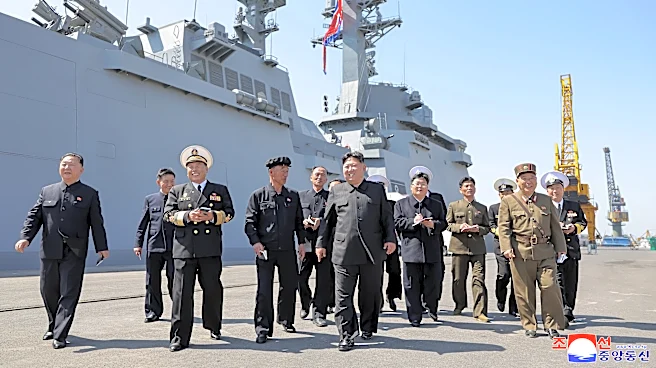
This action follows warnings from the U.N.'s nuclear watchdog about North Korea's significant advancements in nuclear weapons development. The launches prompted an emergency meeting of South Korea's National Security Council, where officials expressed concern and urged North Korea to cease its missile tests. The U.S. and Japanese militaries also detected the launches, with Japan's Defense Ministry protesting the action as a threat to regional peace and a violation of U.N. Security Council resolutions. The site of the launch, Sinpo, is known for its submarine shipyard, raising questions about whether the missiles were launched from a submarine, which would mark a significant development in North Korea's military capabilities.
Why It's Important?
The missile launches by North Korea are significant as they underscore the ongoing tensions in the region and the potential threat posed by North Korea's advancing military capabilities. The ability to launch missiles from submarines would make it more challenging for adversaries to detect and intercept such attacks, increasing the strategic threat to neighboring countries and the broader international community. This development comes amid stalled diplomatic efforts between North Korea and the United States, following the collapse of nuclear talks in 2019. The recent missile tests could be an attempt by North Korea to strengthen its negotiating position ahead of potential future diplomatic engagements, particularly as President Trump is set to meet with China's President Xi Jinping, which could open new diplomatic channels.
What's Next?
The international community, particularly the U.S., South Korea, and Japan, will likely continue to monitor North Korea's military activities closely. There may be increased diplomatic efforts to address the security concerns raised by these missile tests. The upcoming summit between President Trump and President Xi Jinping could provide an opportunity for discussions on North Korea, potentially leading to renewed diplomatic efforts to address the nuclear issue. However, North Korea's insistence on maintaining its nuclear arsenal as a precondition for talks remains a significant hurdle. The situation may also prompt further military readiness and strategic planning among North Korea's neighbors to counter potential threats.
Beyond the Headlines
The ongoing missile tests by North Korea highlight the broader geopolitical challenges in the region, including the balance of power and the role of international diplomacy in addressing nuclear proliferation. The situation raises ethical and legal questions about the enforcement of international agreements and the effectiveness of sanctions in curbing North Korea's military ambitions. Additionally, the tests may influence regional security policies and defense spending, as countries seek to bolster their defenses against potential threats. The developments also underscore the importance of multilateral cooperation in addressing global security challenges.