




What's Happening?
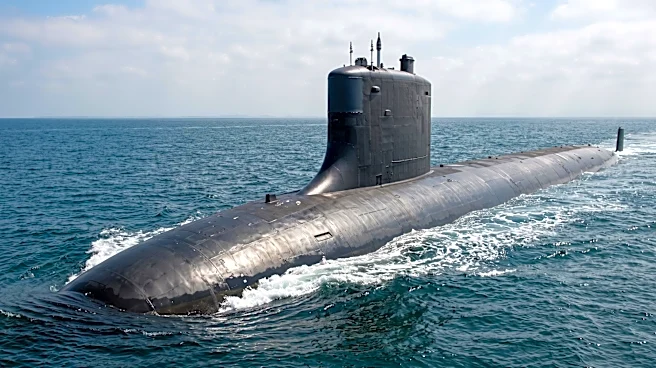
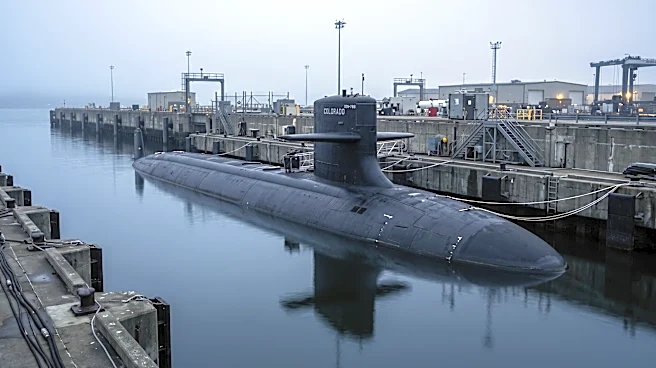
The Pentagon has announced that the USS Colorado (SSN-788), a Virginia-class attack submarine, will be the first U.S. Navy submarine assigned to Submarine Rotation Force West (SRF-West). This assignment marks a significant step in the AUKUS security pact,
with the USS Colorado scheduled to begin its deployment in late 2027. The SRF-West initiative is a key component of the AUKUS agreement between Australia, the United Kingdom, and the United States, designed to enhance trilateral security cooperation and provide Australia with nuclear-powered submarine capabilities. The USS Colorado recently arrived at HMAS Stirling for a scheduled maintenance period, marking the fourth such submarine maintenance in the region since AUKUS was established.
Why It's Important?
The selection of the USS Colorado for SRF-West is a pivotal moment for the AUKUS alliance, signaling concrete progress in its implementation. This initiative is crucial for strengthening security and stability in the Indo-Pacific region, providing a robust deterrent against potential adversaries. For the U.S., it demonstrates a commitment to its allies and a strategy to project power and maintain maritime dominance. For Australia, it represents a critical step towards acquiring advanced nuclear-powered submarine technology, enhancing its defense capabilities significantly. The rotational presence of U.S. submarines will also facilitate knowledge transfer and operational integration, laying the groundwork for Australia's future submarine fleet. This move has broad implications for regional geopolitics and defense strategies.
What's Next?
The USS Colorado's deployment in late 2027 will initiate the operational phase of SRF-West. This will involve regular rotations of U.S. and eventually UK submarines to Australian bases, fostering deeper interoperability and shared operational experience. Australia will continue its efforts to develop the necessary infrastructure, training programs, and regulatory frameworks to support nuclear-powered submarines. The long-term goal is for Australia to acquire its own fleet of nuclear-powered submarines, with the first Australian-built submarines expected in the 2040s. This phased approach will require sustained commitment and coordination among the AUKUS partners, including ongoing technological collaboration and personnel exchanges.
Beyond the Headlines
The AUKUS agreement and the deployment of U.S. submarines to Australia carry significant geopolitical weight beyond immediate defense capabilities. It signals a strategic realignment in the Indo-Pacific, aimed at countering growing influence from other regional powers. The transfer of nuclear propulsion technology, while not involving nuclear weapons, is a sensitive issue that has drawn international attention and debate regarding non-proliferation norms. This initiative also highlights the increasing importance of undersea warfare in modern defense strategies and the commitment of the U.S. and its allies to maintaining a technological edge. The long-term success of AUKUS will depend on sustained political will, technological innovation, and effective diplomatic engagement with regional partners.