










What's Happening?
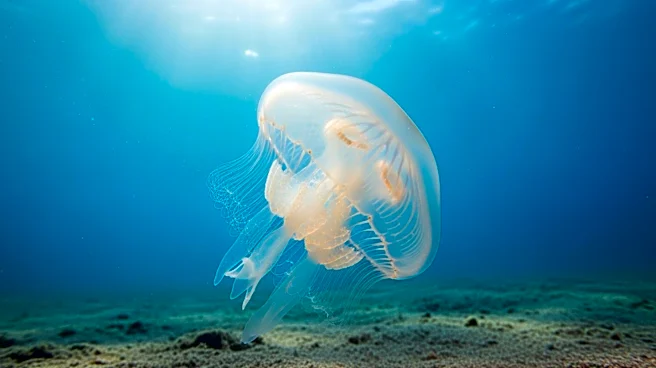
Clinging jellyfish have made a return to the bays and rivers of the Jersey Shore, raising safety concerns among locals and visitors. A recent incident involved a young girl who suffered severe pain for several days after being stung by one of these jellyfish.
As the summer season draws more people to the coastal waterways, experts are advising caution. The clinging jellyfish, known for their small size and potent sting, are not native to the area but have been increasingly spotted in recent years. Their presence is particularly concerning because they are difficult to see in the water, making it easy for swimmers to accidentally come into contact with them.
Why It's Important?
The return of clinging jellyfish to the Jersey Shore poses a significant public safety issue, especially during the peak summer months when the area sees a surge in visitors. The jellyfish's sting can cause severe pain and potentially serious health complications, which could lead to increased medical emergencies and strain on local healthcare facilities. Additionally, the presence of these jellyfish may deter tourists, impacting the local economy that heavily relies on summer tourism. Businesses in the hospitality and recreation sectors could face financial challenges if beachgoers choose to avoid the area due to safety concerns.
What's Next?
Local authorities and environmental experts are likely to monitor the situation closely, possibly implementing measures to inform and protect the public. This could include increased signage at beaches, public awareness campaigns, and possibly even temporary closures of affected areas if the jellyfish population becomes too large. Researchers may also study the environmental factors contributing to the jellyfish's presence to develop long-term strategies for managing their impact.