

What's Happening?
India and the United States have announced a framework for an interim trade agreement aimed at enhancing bilateral trade relations. Union Agriculture Minister Shivraj Singh Chouhan emphasized that the agreement protects Indian farmers by safeguarding
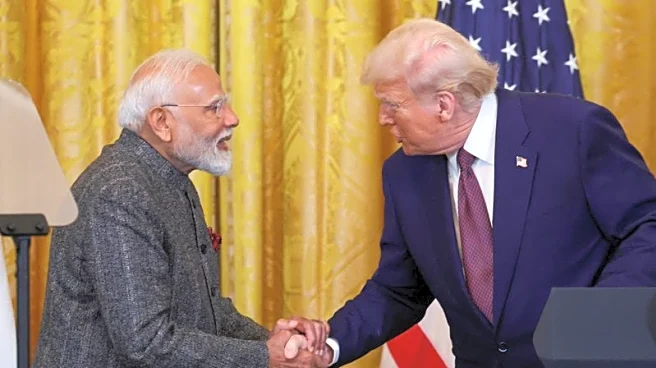
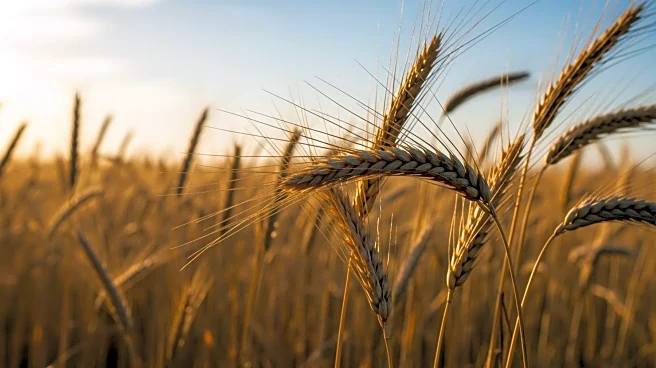
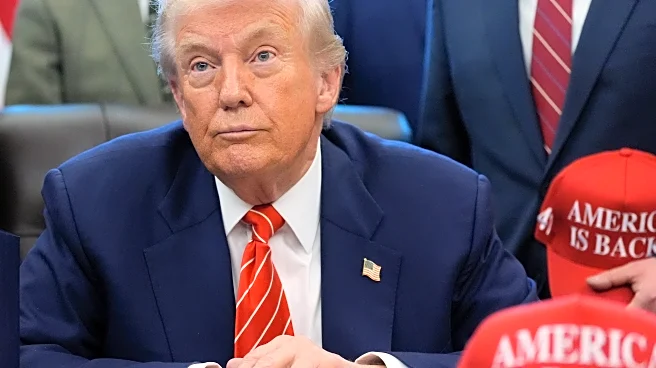
major crops and dairy products. The deal excludes several agricultural items from import, such as frozen potatoes, peas, and dairy products, to protect local farmers. The framework supports ongoing discussions for a broader Bilateral Trade Agreement, initiated by President Trump and Prime Minister Narendra Modi. The agreement is expected to improve market access and strengthen supply chains, with India reducing tariffs on certain US industrial goods.
Why It's Important?
The interim trade agreement is significant as it aims to balance trade relations between India and the US while protecting sensitive sectors like agriculture. By excluding key agricultural products from import, India ensures the protection of its domestic farmers, which is crucial for the country's rural economy. The agreement also opens up the US market for Indian products, potentially boosting exports of items like basmati rice and spices. This development could lead to increased economic opportunities for Indian farmers and exporters, while also fostering stronger trade ties between the two nations.
What's Next?
Both countries plan to implement the framework quickly and work towards finalizing the interim agreement. The goal is to eventually sign a comprehensive Bilateral Trade Agreement. The interim deal is expected to ease trade tensions and provide relief to Indian exporters. As negotiations continue, stakeholders from various sectors will likely monitor the impact of tariff changes and market access provisions. The agreement's success will depend on its ability to balance protection for sensitive sectors with opportunities for growth in other areas.