







What's Happening?
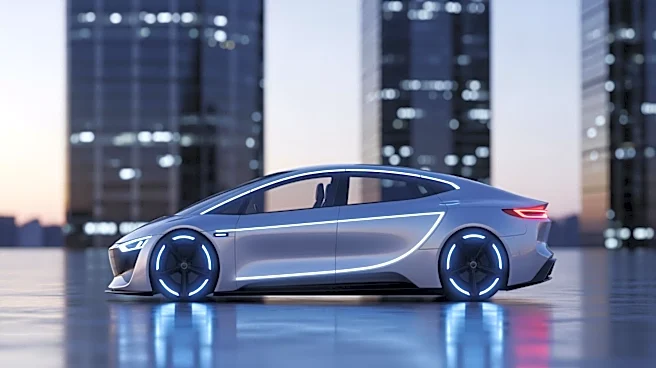
China has introduced its first purpose-built Robotaxi, the Eva Cab, at Auto China 2026. This vehicle is designed specifically for autonomous driving and integrates advanced technologies from Geely, Qianli Haohan, and CaoCao. The Eva Cab features a quantum-level
AI architecture for enhanced security and is equipped with multiple redundancies for safety. It is set to enter mass production in 2027, with plans to deploy 100,000 units by 2030. The Robotaxi is part of a broader initiative to create a smart mobility ecosystem, integrating with Green Intelligent Mobility Hubs for automated services.
Why It's Important?
The introduction of the Eva Cab marks a significant advancement in autonomous vehicle technology, potentially transforming urban mobility. By reducing the total cost of ownership and enhancing safety and user experience, the Robotaxi could lead to more widespread adoption of autonomous vehicles. This development is crucial for the shared mobility industry, offering a glimpse into a future with reduced traffic congestion and improved transportation efficiency. The project also highlights China's commitment to leading in smart mobility solutions, which could influence global markets and technological standards.
What's Next?
CaoCao plans to expand its Robotaxi services domestically and explore international markets, including Hong Kong. The company aims to leverage Geely's global network to accelerate its strategic expansion. As the Robotaxi fleet grows, it will be integrated into a comprehensive smart mobility ecosystem, potentially setting new standards for autonomous transportation. Stakeholders in the automotive and technology sectors will likely monitor these developments closely, as they could impact regulatory frameworks and competitive dynamics in the global market.