





What's Happening?
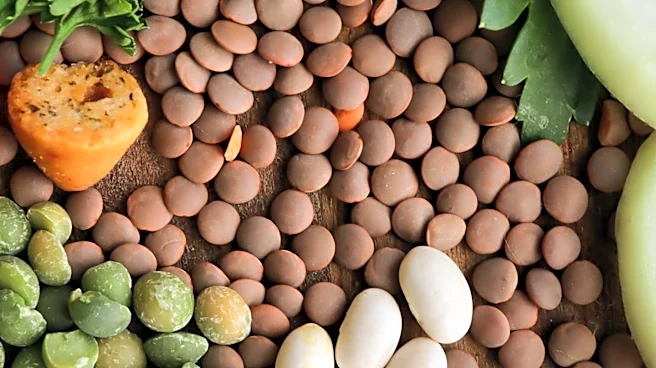
Researchers at ETH Zurich have developed a novel method called 'freeze-structuring' to transform whole legumes, such as peas, beans, and lentils, into products with a fibrous, meat-like texture. This process aims to reduce food waste and retain the nutritional
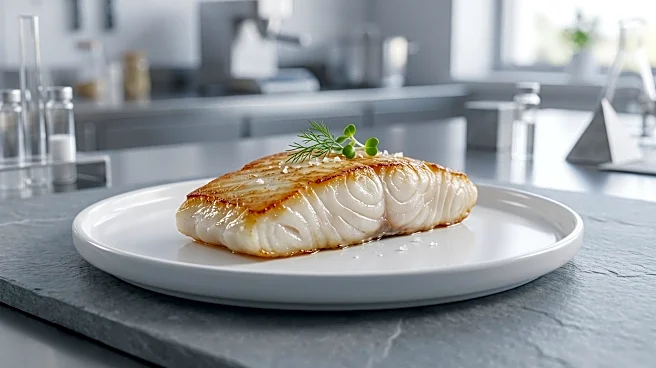
value of harvested crops. The method involves soaking and blending legumes into a puree, heating it to form a gel, and then freezing it directionally from one side. As ice crystals form, they compress the legume puree into thin, parallel layers. Upon thawing, the ice melts, leaving behind a distinct fibrous structure that mimics the bite and texture of meat or fish. This technique has been successfully applied to various legume species, accounting for 96% of global legume production, with different legumes yielding varying textures.
Why It's Important?
This innovation holds significant importance for the U.S. food industry and consumers, particularly in the growing market for plant-based protein alternatives. The ability to create meat-like textures from whole legumes using a simple, accessible method could lead to more sustainable and nutritious food options. It addresses concerns about food waste and the loss of dietary fibers, vitamins, and minerals often associated with traditional industrial food processing. For consumers, this could mean a wider availability of plant-based products that offer a satisfying texture, potentially encouraging greater adoption of legume-rich diets. The simplicity of the method also suggests potential for household application, empowering individuals to create their own plant-based alternatives. This development could also impact agricultural practices by increasing demand for diverse legume crops.
What's Next?
The ETH Zurich researchers plan to further investigate why different legumes produce varying consistencies during the freeze-structuring process. A deeper understanding of these mechanisms could enable them to design food products with specific textural properties in the future. They are also collaborating with professional chefs to develop specific recipes, spices, and marinades for these legume-based products. While the method is simple enough for household use, the next steps will likely involve scaling up production for industrial applications and exploring commercial partnerships. Further research will also focus on consumer preferences for these new legume-based products to guide future development and market introduction.
Beyond the Headlines
The 'freeze-structuring' method represents a significant step towards more sustainable and efficient food systems. By utilizing whole legumes and minimizing processing, it aligns with broader trends in food innovation focused on reducing environmental impact and enhancing nutritional content. This approach could challenge conventional industrial food production methods that often involve breaking down raw materials and reassembling them, which can lead to nutrient loss and byproducts. Ethically, it offers a compelling alternative for consumers seeking to reduce meat consumption without sacrificing textural satisfaction. Culturally, the introduction of easily prepared, texturally appealing legume products could accelerate the shift towards plant-forward diets, influencing culinary traditions and dietary habits in the U.S. and globally. The simplicity of the method also raises questions about democratizing food production and empowering individuals to create their own food solutions.