






What's Happening?
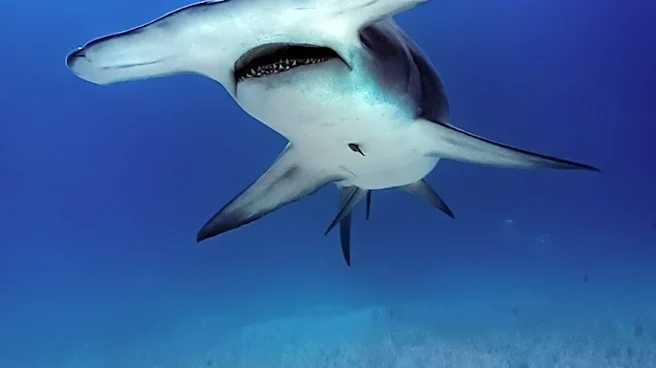
In 2026, Florida has witnessed the discovery of six dead great hammerhead sharks, with the latest found on a beach in Jupiter. This critically endangered species is protected under Florida law, which prohibits their hunting or harvesting. The recent discovery,
made by a local resident, showed no visible external injuries, leading scientists to question the cause of death. Experts, including Spencer Roberts from the University of Miami, suggest that shore-based shark fishing might be contributing to these deaths. Despite the lack of visible trauma, sharks can die from exhaustion after being caught and released from fishing lines. The situation is alarming for conservationists, as maintaining healthy shark populations is crucial for balanced marine ecosystems.
Why It's Important?
The death of these great hammerhead sharks is significant due to their status as a critically endangered species. Healthy shark populations are vital for maintaining marine ecosystems, which support fisheries and coastal economies. The repeated discoveries of dead sharks highlight potential illegal activities, such as shore-based fishing, which could be exacerbating the decline of this species. The situation poses a threat to Florida's marine biodiversity and the economic activities dependent on it, including tourism and recreation. The illegal harvesting of sharks or their parts is a criminal offense in Florida, adding a legal dimension to the conservation challenges.
What's Next?
Conservationists and scientists are likely to increase monitoring and research efforts to understand the causes of these shark deaths better. There may be calls for stricter enforcement of existing laws against illegal fishing practices. Public awareness campaigns could be initiated to educate the community about the importance of protecting endangered species and the legal implications of harming them. Stakeholders, including environmental groups and government agencies, might collaborate to develop strategies to prevent further losses and ensure the survival of the great hammerhead population.
Beyond the Headlines
The repeated deaths of great hammerhead sharks in Florida could lead to broader discussions about marine conservation policies and the effectiveness of current regulations. The situation may prompt a reevaluation of fishing practices and the need for more sustainable approaches to marine resource management. Additionally, the issue highlights the ethical responsibility of communities and individuals to protect endangered species and preserve biodiversity for future generations.